
SEO Marketing Funnel: 9 Proven Steps to Drive Conversions
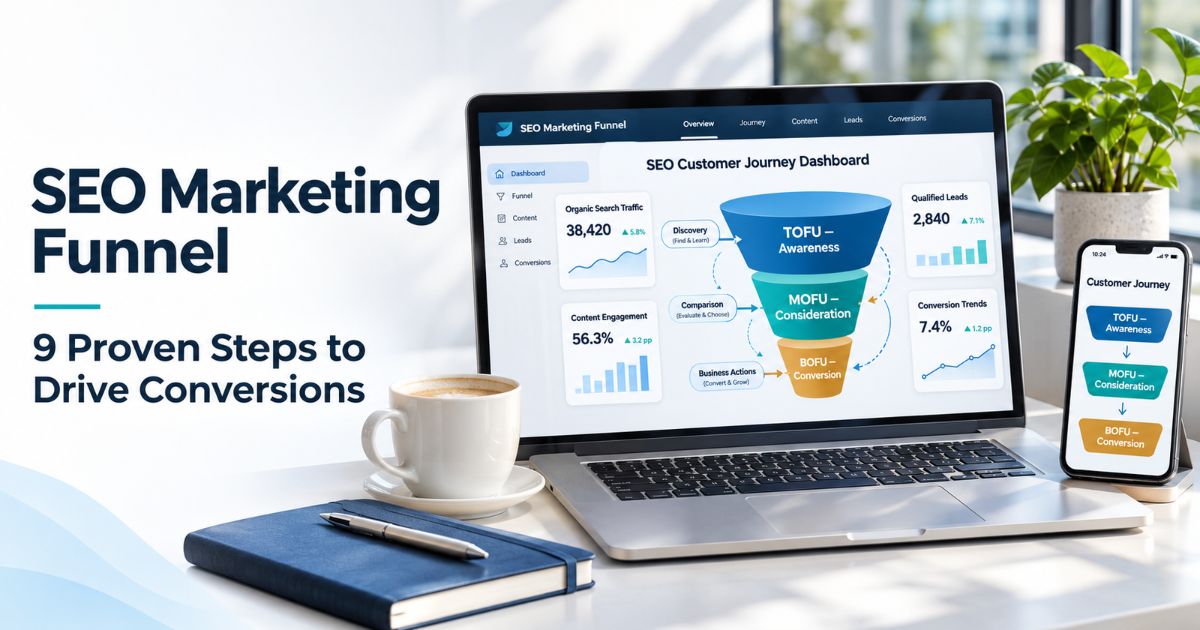
SEO marketing funnel is a framework for connecting the questions people search for with the information they need before becoming customers. Some people are discovering a problem for the first time. Others are comparing solutions, checking prices, reading reviews, or preparing to make a decision. Search can support all of these moments, but each moment calls for a different page and a different measure of success.
A useful SEO marketing funnel does not assume that everyone follows a straight line from one article to a purchase. Someone might first discover a business through a comparison page, return for an educational guide, and contact the company weeks later. The goal is to make each relevant page helpful on its own while connecting related resources and making the next action clear.
This guide walks through nine practical steps for planning, creating, connecting, and measuring content across the customer journey. It also explains where referrals and earned mentions fit, how to avoid keyword-stuffed funnel pages, and why clicks alone cannot prove commercial success. If you are building a topic plan from scratch, begin with our content mapping and search intent guide and explore the Content SEO & Marketing library.
Key Takeaways
- Top-of-funnel content helps people understand a problem, question, or category; it does not need to push an immediate sale.
- Middle-of-funnel pages help readers compare approaches, evaluate suitability, and build confidence.
- Bottom-of-funnel pages help qualified visitors make a decision using accurate details about products, prices, availability, or contact options.
- Search intent, not an arbitrary keyword list, should determine which page type serves each stage.
- Connect related pages with descriptive internal links and relevant calls to action instead of forcing every reader down one fixed path.
- Use Google Search Console for organic search exposure and GA4 or business systems for meaningful onsite outcomes.
- Measure stage-level performance with appropriate metrics, keeping clicks, sessions, leads, and purchases distinct.
- Review real customer questions, feedback, and changes in search demand to improve the journey over time.
What Is an SEO Marketing Funnel?
The SEO marketing funnel adapts the familiar marketing journey to organic search. The traditional labels are TOFU (top of funnel), MOFU (middle of funnel), and BOFU (bottom of funnel). They are planning categories, not official labels that Google assigns to keywords or pages. They help editors choose the appropriate information, depth, and next step for a searcher’s likely task.
At the awareness stage, a user might ask why a website has slow loading times. During consideration, they may compare performance optimization methods or agencies. At the decision stage, they may search for a specific service provider’s pricing, qualifications, or consultation options. These are different needs, even when they relate to the same subject.
The SEO marketing funnel also includes activities after an initial sale. Existing customers search for setup instructions, support, compatibility information, and advanced tips. Retention and advocacy do not always fit neatly into the three classic stages, so a complete strategy should also make useful post-purchase information easy to find.
| Journey Stage | Typical Search Intent | Helpful Content | Appropriate Next Step |
|---|---|---|---|
| TOFU: Awareness | Understand a problem or learn the basics | Explainers, definitions, beginner guides, troubleshooting | Read a related guide or explore options |
| MOFU: Consideration | Compare solutions and evaluate trade-offs | Comparisons, how-to guides, use cases, case studies | Examine features, proof, or suitability |
| BOFU: Decision | Choose a provider, product, or service | Product and service pages, pricing, demos, availability, FAQs | Purchase, book, request a quote, or contact |
| Post-purchase | Use, maintain, or expand a solution | Help documentation, tutorials, support resources | Complete a task or get assistance |
Stage labels are useful only when they improve the reader’s experience. A broad definition page should not pretend every visitor wants a sales call. Equally, a person searching for a specific service price should not be forced to read a long introductory lesson before seeing essential commercial facts.
9 Practical Steps to Build an SEO Marketing Funnel
1. Define the Business Goal and the Audience’s Real Need
Start an SEO marketing funnel with a business decision rather than a traffic target. Are you trying to attract qualified consultations, increase ecommerce purchases, help visitors choose a product, or reduce the number of repetitive support inquiries? Choose a primary outcome that can be checked in a business system, then document secondary goals that serve the journey.
Write down who the intended audience is and which situations lead them to search. For a tutoring business, parents might need general information about an examination, compare tutoring formats, and eventually seek available instructors. For a software company, team leaders might search for a process problem, compare products, and request a demonstration. One universal funnel rarely fits both audiences.
In the SEO marketing funnel plan, document the target market, business offering, buyer constraints, conversion definition, and the person responsible for tracking results. Distinguish a qualified inquiry from a generic contact form submission. An educational newsletter signup can be valuable, but it should not be reported as a completed sale.
Our SEO reporting framework explains how to translate organic performance into decisions. Use that approach to identify what success actually means before commissioning a large content calendar.
2. Map Search Intent Instead of Assigning a Stage by Keyword Alone
Search intent is the reason behind a query. A phrase containing “best” may suggest comparison, but it can also be an informational request; “how to” can appear immediately before a purchase if the user wants installation guidance. Review the current results, likely audience, and actual question before labeling a query TOFU, MOFU, or BOFU.
For each SEO marketing funnel topic, group related queries into tasks: learn, compare, select, implement, or troubleshoot. Record the best existing page for each task, whether another page is needed, and the internal links that would help the user move naturally. Avoid creating separate near-identical pages just because keywords have slightly different wording.
For example, “what is an email authentication record?” fits an explanatory guide. “SPF versus DKIM” calls for a comparison. “Email security consultant pricing” needs clear service information. Before producing a page, check what already exists, the level of expertise expected, and what would make the result more useful.
Within an SEO marketing funnel, use keyword difficulty estimates as a prioritization clue rather than a guarantee of rankings. Our keyword difficulty guide explains why competition scores require human review, and the featured snippets resource shows how precise answers can help informational pages satisfy specific questions.
3. Create Awareness Content That Answers the First Question
In an SEO marketing funnel, TOFU content helps a reader recognize, understand, or frame a problem without requiring them to know your brand. Think definitions, beginner tutorials, checklists, and clear problem explanations. An awareness article should deliver its promised answer near the beginning and provide enough context for a reader to continue independently.
In an SEO marketing funnel, the best awareness articles are not disguised sales pages. A guide about why websites load slowly should explain likely causes and ways to test them; it should not repeatedly interrupt the explanation with a generic agency pitch. Include expert or firsthand detail when available, transparent limitations, and accurate examples.
Useful calls to action at this stage might be “read the troubleshooting checklist,” “compare available approaches,” or “download a planning template.” If visitors show clear purchase intent, a service link may also be useful, but the editorial page should still answer the original question. For workflow ideas, see our SEO content development guide.
Awareness can also come from external communities, editorial mentions, and relevant referrals. Some such links may carry a nofollow attribute, but that attribute does not automatically make the human referral worthless. Treat these visits as potential discovery opportunities, not as proof of a direct ranking boost. This is one supporting channel within the SEO marketing funnel, not its foundation.

4. Build Consideration Content That Helps People Compare Options
In an SEO marketing funnel, MOFU pages help searchers decide which solution category, product, or method suits them. A strong comparison explains criteria, costs where available, limitations, compatibility, service requirements, and situations where each option might be unsuitable. It does not need to declare your product the winner in every case.
The SEO marketing funnel should offer comparisons that reflect real customer decisions. A construction company could explain renovation versus replacement; a SaaS brand could compare features and integrations; an online retailer could publish buying guides showing meaningful differences between product types. Use tables only when the facts are accurate and the columns help the user choose.
Case studies can also serve consideration, but label the organization, challenge, method, and outcome honestly. Do not invent customer testimonials, review ratings, or performance improvements. If a case is hypothetical, say so. Google recommends creating useful, reliable, people-first information rather than content primarily designed to manipulate rankings; see its official people-first content guidance.
When mapping an SEO marketing funnel, link awareness guides to genuinely relevant comparisons, and link comparison pages back to deeper explanatory resources. A reader might want to revisit the basics before making a choice. Reviews and community discussions can surface additional questions worth answering, but user-generated links and claims should be moderated and checked.

5. Make Decision Pages Specific, Transparent, and Easy to Use
At the bottom of an SEO marketing funnel, visitors often know what they want to evaluate next. They may search for a named product, a local provider, a service quote, a shipping condition, or an appointment. The correct page should make important details easy to find: the exact offering, who it serves, key requirements, credible proof, price or quote process where appropriate, and a clear path to contact or purchase.
An SEO marketing funnel breaks down when a high-intent visitor lands on a generic blog article without a practical next step. Service pages should describe real scope and availability. Ecommerce pages should make product conditions and stock information clear. Mobile forms should be usable and should not ask for unnecessary information before a basic inquiry.
For local businesses, a relevant landing page may need location, service area, opening or contact details, and branch-specific facts. Do not fabricate offices or produce dozens of location pages that repeat identical text without serving distinct needs. Our local landing page examples explain useful location-specific content.
When auditing the SEO marketing funnel, check whether the commercial page still matches the promise made in the earlier guide. If an awareness article discusses an entry-level option, do not route all its visitors to an enterprise-only sales page without explanation. Clear limitations increase trust even when they reduce the number of unqualified inquiries.
6. Connect the Stages With Useful Internal Links and Calls to Action
Internal links connect an SEO marketing funnel by helping readers explore relevant next steps; they also help search engines discover relationships among pages. A beginner guide can link to a comparison, a comparison can link to the appropriate product page, and a product page can link back to independent documentation or support. The connection should be meaningful rather than mechanical.
For the SEO marketing funnel, plan a small set of contextual paths based on the user’s probable next question. Use descriptive anchor text such as “compare appointment tools” instead of repeating “click here.” Do not insert the same service CTA after every paragraph or force readers through a rigid sequence. They should be free to enter, skip, or revisit stages.
Make site navigation, categories, breadcrumbs where appropriate, and related-content sections understandable. Our site architecture guide covers crawlable relationships, while the recurring SEO tasks checklist helps maintain links as content changes.
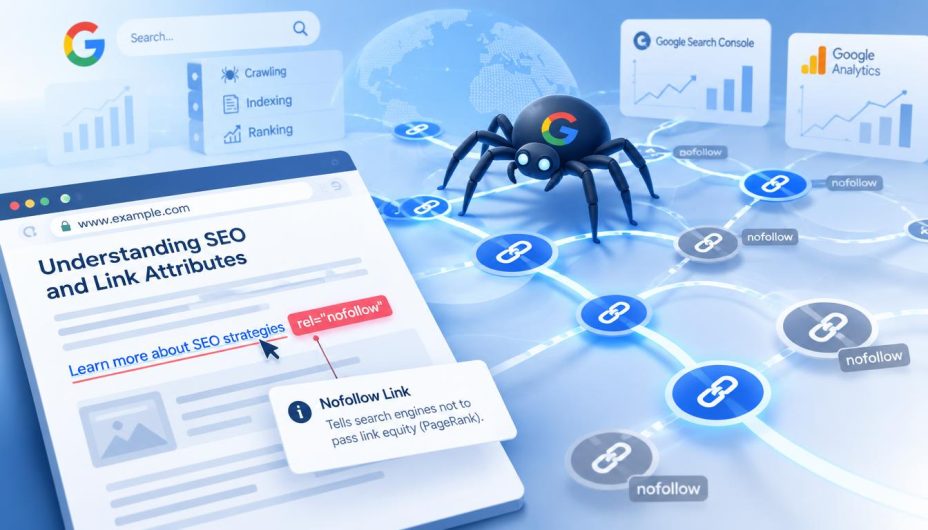
Outbound editorial references may help readers verify an explanation, but they do not replace the internal route to a relevant next action. In an SEO marketing funnel, external citations and internal navigation have distinct roles. Check destination accuracy, avoid paid placements disguised as editorial recommendations, and do not apply a blanket nofollow rule to every genuine external reference.
7. Strengthen Trust and Remove Friction at Every Stage
Even a well-organized SEO marketing funnel cannot compensate for misleading claims or a frustrating experience. Check that pages load reliably, main content works on mobile, headings explain the subject, and information is accurate. Provide clear ownership or authorship where appropriate. Service pages should explain what customers will receive rather than relying on vague superlatives.
Trust needs differ across stages. Awareness content benefits from accurate explanations and credible sourcing. Consideration pages need transparent comparisons and limitations. Decision pages need reliable policies, accessible contact options, and honest product details. For sensitive purchases, qualifications and disclaimers may matter, but they should be factual rather than decorative badges.
For the SEO marketing funnel, review user-generated reviews and testimonials carefully. Genuine feedback can help people evaluate an offer, but fabricated ratings and unsupported case-study outcomes can mislead them. Keep a corrections process and update stale content as needed. Our editorial standards and content maintenance guide provide related principles.
Accessibility also matters. Label form fields, use readable text, describe meaningful images, and avoid CTAs that depend only on color or an inaccessible widget. A simpler page with an accurate next step may outperform a visually elaborate page in actual business usefulness.
8. Measure Each Stage With the Right Data and Denominator
Search Console can show how pages and queries perform in Google Search through clicks, impressions, CTR, and average position. GA4 can show onsite sessions, engagement, and configured key events. A CRM or commerce system can help validate qualified leads and sales. These tools count different activities, so their totals should not be treated as identical.
In the SEO marketing funnel, awareness may be evaluated through relevant impressions, clicks, and engaged visits; consideration through meaningful page interactions, comparison-page engagement, and demo exploration; and decision through qualified inquiries, bookings, or purchases. Do not claim that a helpful guide failed because it did not directly produce a sale on the first visit.
Define every rate. A session-to-lead rate uses qualified leads divided by relevant sessions. A lead-to-customer rate uses customers divided by eligible leads. If your organization reports a multi-touch journey, document attribution assumptions and avoid presenting one article as the proven sole cause of a sale. Google explains how to identify important user actions through GA4 key events.
The SEO marketing funnel should be measured with comparable date ranges, traffic channels, countries, and content groups. Use our SEO KPI guide, analytics reporting guide, and SEO analytics library to design a consistent report.
9. Improve the Journey Based on Evidence, Not a Fixed Template
Review the SEO marketing funnel regularly, but prioritize evidence rather than rewriting every article on a schedule. Compare content groups and business outcomes. Look for awareness pages that attract the wrong audience, consideration pages that omit crucial decision criteria, or decision pages where the form or purchasing process fails.
Record the observation, possible explanation, test, assigned owner, and follow-up metric. An internal link that readers frequently use may justify building a better comparison page. A high-intent product page with strong visits but no inquiries may deserve usability or offer-clarity research before additional traffic investment.
Changes outside the funnel can affect trends. Seasonal demand, new competitors, site redesigns, and confirmed ranking updates may shift search performance. Our SERP volatility guide and Google update tracker provide context when traffic changes overlap wider search events.
For the SEO marketing funnel, keep improvement experiments focused. Update one page group with a clear hypothesis, monitor meaningful changes, and retain a dated record. Our SEO forecasting guide explains how to plan using assumptions and ranges rather than promised future outcomes.

SEO Marketing Funnel Content Matrix: TOFU, MOFU, and BOFU
The table below is a planning example, not a claim that every person takes the same route. Use this SEO marketing funnel matrix to coordinate editors, designers, and service teams. Use it to map content to intent, then adapt the stages for your market. A single useful page may support more than one stage, and the intent of a query can change with context.
| Stage | Illustrative Query | Content Type | Next Step | Useful Measurement |
|---|---|---|---|---|
| TOFU | Why is my website slow? | Educational troubleshooting guide | Read a testing checklist | Relevant impressions, clicks, engaged sessions |
| MOFU | Website speed optimization tools compared | Comparison and methods guide | Explore a suitable solution or service | Qualified interactions and comparison engagement |
| BOFU | Website performance audit service pricing | Specific service page with quote details | Request an audit or consultation | Validated inquiries and booked calls |
| Retention | How to monitor speed after a site update | Support tutorial | Complete ongoing maintenance | Task completion and useful support interactions |
When creating the SEO marketing funnel content matrix, use your business vocabulary. Searchers do not necessarily use funnel terminology. A customer who searches for a specific model number may enter at the decision stage, while a repeat customer may seek a troubleshooting answer after purchase. The content map should support those realities rather than force every visitor to start from an introductory article.
Worked Example: A Fictional Online Tutoring Business
Imagine a fictional tutoring academy offering exam preparation. This example does not describe actual client results. The team wants more qualified bookings from parents looking for support. In the awareness stage, it publishes an accurate guide to the differences between two exam systems. During consideration, it offers a comparison of one-to-one tutoring and group lessons, with transparent advantages and limitations.
At the decision stage, the academy presents real available subjects, session format, teacher qualifications, schedules, and an inquiry form. A parent can arrive directly on the subject page or follow the internal link from a guide. The academy makes pricing or the quote process clear instead of hiding every essential detail behind a sales call.
To evaluate the SEO marketing funnel, suppose the informational guide receives 4,000 Google Search clicks during a period, while the comparison page attracts 800 organic sessions and the booking page receives 150 qualified inquiry-form submissions from all channels. Those are different metrics and scopes, so dividing 150 by 4,000 would not yield a defensible funnel conversion rate. The team must first identify which users or sessions were actually eligible for each step and how attribution is defined.
Instead, the academy measures stage-level behavior and verified bookings, reviews common questions from sales conversations, and updates unclear sections. This approach keeps the SEO marketing funnel focused on customer usefulness and honest results rather than inventing a linear journey that analytics cannot fully observe.
Which SEO Funnel Metrics Should You Report?
Choose a small set of metrics for each stage rather than reporting every available chart. For an SEO marketing funnel, a compact dashboard can show where people encounter useful content and which steps produce meaningful outcomes. An SEO marketing funnel dashboard should explain what the audience did, the level of confidence in the data, and what the business will change. It can include a short executive summary, stage-specific trends, and an action register with owners.
| Metric | Primary Source | What It Explains | Common Limitation |
|---|---|---|---|
| Search impressions | Search Console | Exposure for related queries | Does not count unique people or visits |
| Search clicks | Search Console | Interactions from Google Search | Not identical to GA4 sessions |
| Organic sessions | GA4 | Website sessions attributed to organic search | Tracking and attribution vary |
| Engagement and key events | GA4 | Useful onsite actions | Event configuration must be validated |
| Qualified inquiries | CRM / validated forms | Potential customers meeting defined criteria | Not every contact becomes a sale |
| Orders or customers | Commerce / CRM | Confirmed business outcomes | Purchase journeys may cross channels |
For the SEO marketing funnel, report the number and rate together whenever a rate is meaningful. “Leads doubled” can describe an increase from two to four, which may be too small for a reliable conclusion. Always disclose the denominator, reporting period, and included channels. Avoid treating newsletter downloads as purchases or total impressions as qualified prospects.
Where Referral Links and Earned Mentions Fit
Not every first encounter in an SEO marketing funnel happens through an organic search result. People may discover a business through a relevant article, an industry newsletter, a forum, a review, or a recommendation. These discovery paths can complement an SEO marketing funnel by leading readers to useful explanations or consideration resources. Their value should be judged by audience relevance and actual visits, not by whether a link carries one particular attribute.
Links marked rel="nofollow", rel="sponsored", or rel="ugc" describe different linking relationships in search systems. They are not funnel stages or promises of ranking improvement. Paid links must be disclosed appropriately and marked with suitable attributes. User-generated contributions should be reviewed for spam and accuracy.
For the SEO marketing funnel, track identifiable referrals separately from Google Search clicks and GA4 organic sessions. If a relevant community discussion sends useful visitors to an awareness guide, that can be a positive referral outcome even when the link is not an editorial SEO endorsement. Do not turn the content journey into a strategy of manufacturing comments or link placements.
Common SEO Marketing Funnel Mistakes
- Using only traffic volume: More visits do not guarantee qualified prospects or customers.
- Forcing all readers toward a sales page: Some visitors need an explanation or independent comparison first.
- Confusing keyword phrases with stages: Examine search intent and current results before labeling a query.
- Creating overlapping articles for every variation: Separate pages need a genuinely different purpose.
- Publishing vague comparisons: Readers need actual distinctions, prices where appropriate, and limitations.
- Hiding essential decision information: Unclear availability or a broken contact form can stop qualified buyers.
- Ignoring internal navigation: A useful article with no relevant next step may leave readers stranded.
- Combining incompatible metrics: Search clicks, sessions, inquiries, and customers are counted differently.
- Assigning all revenue to the first blog post: Multi-touch journeys require documented attribution rules.
- Treating link attributes as the strategy: Nofollow and sponsored labels are not substitutes for helpful content.
SEO Marketing Funnel Checklist Before Publishing
- Define the audience, offer, market, and meaningful business outcome.
- Map real search questions to awareness, consideration, decision, or support needs.
- Review existing pages to avoid unnecessary overlap.
- Write clear introductory answers for awareness searches.
- Explain options, evidence, limitations, and suitability in comparison content.
- Make commercial pages accurate, specific, accessible, and easy to act on.
- Use descriptive internal links connecting relevant resources.
- Test forms, bookings, checkout, and important mobile interactions.
- Verify claims, reviews, and actual product or service availability.
- Check Search Console and GA4 property scope and reporting definitions.
- Validate important key events and qualified lead data.
- Keep a change log and measure comparable periods.
- Assign an owner and review date to each meaningful improvement.
Frequently Asked Questions
What is an SEO marketing funnel?
An SEO marketing funnel organizes useful search content around customer needs, typically from awareness to consideration and decision. It helps teams match pages to intent, provide relevant next steps, and measure meaningful outcomes without assuming every person follows one fixed route.
What do TOFU, MOFU, and BOFU mean?
TOFU is top of funnel, generally awareness. MOFU is middle of funnel, generally consideration and comparison. BOFU is bottom of funnel, generally decision and conversion. They are planning labels rather than ranking categories assigned by Google.
Can one page serve more than one funnel stage?
Yes. A detailed comparison may educate a beginner and help a ready buyer decide. Give the page one clear purpose and provide relevant onward links instead of forcing every section into a rigid category.
Which keywords are best for the awareness stage?
Questions, definitions, and problem-focused queries can be useful starting points, but the best targets depend on the audience. Review the actual search intent rather than relying only on words such as “what” or “how.”
What content is most useful for the consideration stage?
Helpful comparisons, product-selection criteria, case studies with verifiable evidence, implementation guides, and clear explanations of trade-offs can support a reader who is comparing realistic options.
How can SEO support the bottom of the funnel?
Accurate product and service pages, pricing or quote information, useful FAQs, location details where relevant, and functioning purchase or contact paths can help qualified searchers complete their intended task.
How should I measure funnel conversions?
Define a real outcome such as a validated lead, booking, or purchase, then use a consistent denominator and attribution method. Google Search clicks and GA4 sessions are different data types and should not be combined as though they were the same event.
Are nofollow links part of an SEO funnel?
Relevant external referrals can introduce people to content at any stage, including links marked nofollow. The attribute itself does not create a funnel or guarantee search rankings; reader relevance and actual outcomes matter more.
How often should I update the funnel content?
Review it when services, customer questions, search intent, or factual information changes, and monitor performance on a consistent schedule. Do not rewrite stable pages solely to appear more recent.
Conclusion
A useful SEO marketing funnel connects real customer questions with clear answers, trustworthy comparisons, and practical decision pages. It makes room for different entry points, supports visitors who need more time, and treats post-purchase help as part of the experience rather than an afterthought.
Build the SEO marketing funnel around audience needs, descriptive internal links, accurate commercial information, and stage-appropriate measurement. Review the data honestly, prioritize meaningful improvements, and avoid mistaking traffic or a plugin score for business success. For more practical resources, explore the Online SEO Blogs homepage.