Digital PR and SEO: 9 Best Strategies for Brand Visibility
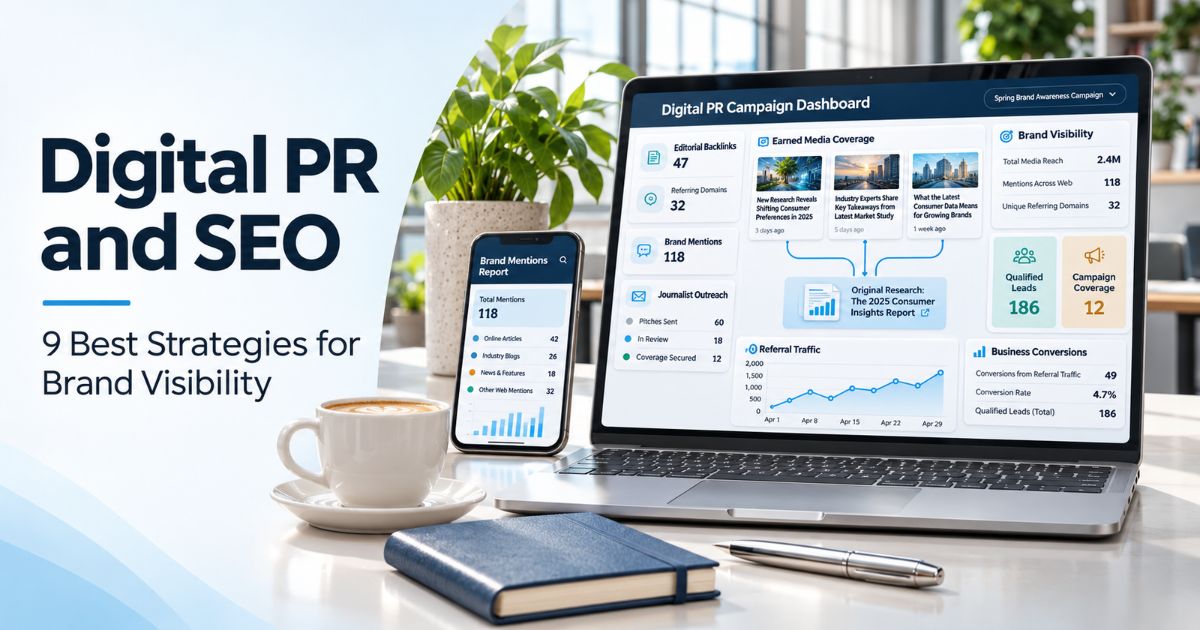
Digital PR and SEO work together when useful stories reach credible publishers and help people discover a brand through coverage, references, and relevant search results. Digital public relations builds relationships and earns attention; search optimization helps the pages behind that attention answer real questions, remain accessible, and serve visitors who want to learn more.
Neither media coverage nor a backlink guarantees a better Google ranking. An independent journalist may mention a company without linking to it, a publication may add a qualified link, or an article may send referral visitors who become customers. Those are different outcomes and deserve separate measurements. A successful campaign starts with audience value rather than a target number of links.
This practical guide explains how digital PR and SEO support each other, how to develop genuinely newsworthy resources, what to ask during journalist outreach, and how to evaluate mentions, links, referral visits, and brand discovery. For related tactics, explore our link prospecting guide and the Off-Page SEO & Link Building section.
Key Takeaways
- Digital PR seeks credible attention, while SEO helps relevant pages become discoverable and useful in search.
- Editorial backlinks, unlinked mentions, social discussions, and paid coverage are distinct results; they should not be counted as equivalent.
- Journalists need useful evidence, credible people, an audience-relevant angle, and an accessible original source.
- Links earned through genuine editorial judgment can support discovery, but no placement guarantees rankings, traffic, or revenue.
- Paid or affiliate links should be qualified appropriately; user-contributed links have their own relationship attributes.
- Track verified coverage, message accuracy, referring pages, referral sessions, qualified actions, and search context separately.
- Use precise outreach and original assets rather than purchasing placements intended to manipulate rankings.
- Keep the underlying website fast, accessible, factual, and easy for referred readers to navigate.
What Are Digital PR and SEO?
Digital PR and SEO are related disciplines with different immediate objectives. Digital PR is the practice of earning online attention through useful information, public-interest stories, expert commentary, research, events, and media relationships. SEO helps a website present helpful information to searchers while maintaining the technical and editorial foundations that allow its pages to appear in relevant search experiences.
Traditional public relations may include newspapers, television, radio, and offline events. Digital campaigns emphasize online publications, newsletters, specialist websites, podcasts, online communities, and other channels where the audience can discover and verify a story. The same story may receive both offline attention and online coverage. What matters is whether it reaches the people for whom it is relevant.
When planning digital PR and SEO, do not equate a third-party authority score with actual authority. Credibility comes from evidence, transparent sourcing, editorial judgment, and demonstrated expertise. A relevant industry publisher with a small audience can be valuable if the readers need the information; a high-traffic general website can be a poor fit for a niche B2B explanation.
For the broader website foundation, review our practical SEO improvements guide. It explains why useful pages and clear site structure matter even when outreach is bringing new visitors.
How Digital PR and SEO Support Each Other
The strongest connection between digital PR and SEO is a useful asset that deserves independent attention. Suppose a company publishes a carefully documented study of energy expenses using reproducible data. A reporter may find a relevant result, interview a qualified spokesperson, quote the analysis, and point interested readers to the source. The coverage helps the publisher tell a story, and the company gains an opportunity to be discovered by a new audience.
There are several possible outcomes. An article might include a normal editorial hyperlink; it might name the company without a link; it might refer to a spokesperson without mentioning the website; or it might link with a rel qualification. None should automatically be described as a specific amount of ranking credit. People can still see a name, visit directly, search for the organization, or reference the underlying research later.
Digital PR and SEO also inform each other’s planning. Search research can reveal questions the audience is asking, while conversations with editors can reveal missing facts, emerging concerns, and terminology that customers use. These signals help content teams build resources that are more useful than generic promotional announcements.
| PR Outcome | What It Means | How to Check It | What Not to Assume |
|---|---|---|---|
| Editorial backlink | A publisher independently references a source URL | Open the published page and inspect the link | Guaranteed ranking improvement |
| Unlinked brand mention | The publisher names the organization without a hyperlink | Verify the wording and page context | A measurable transfer of link equity |
| Referral visit | A user visits from a referring website | Review appropriately configured analytics | That every visit is a sale or organic search click |
| Branded search interest | Searchers use queries containing the brand name | Examine suitable search data over comparable periods | That one article caused all demand changes |
| Paid placement | A disclosed commercial media relationship | Review the contract, disclosure, and link markup | Independent earned coverage |
9 Practical Steps for Digital PR and SEO Campaigns
1. Define the Audience, Story, and Business Goal
Begin a digital PR and SEO campaign by asking who should care about the story and why. An industry researcher, a local resident, a technical buyer, and a general consumer have different information needs. Identify the audience before choosing a list of publications. Then select a measurable objective such as relevant editorial coverage, visits to a research hub, qualified inquiries, or greater awareness of a new service category.
Write a short brief covering the organization, primary audience, geographic market, customer problem, evidence available, and spokesperson. State what would make the story genuinely informative rather than a disguised advertisement. “We launched a website” is rarely enough. “Our public dataset reveals a previously underreported local trend” may deserve attention if the data is credible and timely.
For digital PR and SEO planning, separate output goals from outcomes. Ten pitches sent are activity, five journalist replies are response, two independent articles are coverage, and three qualified inquiries are business results. Reporting them as separate figures keeps your team accountable without inventing a causal ranking claim. Our SEO reporting framework can help structure that brief and the final report.
2. Develop an Original, Checkable Story Asset
For digital PR and SEO, a compelling resource can be original survey research, a dataset, a specialist explanation, an interactive calculator, an expert-led analysis, or a documented community project. The asset should answer a real question or add verifiable detail that a publication cannot obtain simply by repeating existing search results.
With digital PR and SEO, the methodology matters as much as the headline. If you publish survey findings, explain the sample, period, population, questionnaire, limitations, and whether responses are representative. If you compare public data, cite the originating source, define the variables, and document how the numbers were calculated. Do not invent statistics or present illustrative charts as measured results.
Make the asset readable for non-specialists. Provide a short summary, an accessible chart with text explanation, a clear publication date, and a contact route for editorial questions. If the findings are complex, add a downloadable methodology or data notes. Use our content mapping process to distinguish the central resource from related explainer pages that answer narrower user questions.
In digital PR and SEO, originality can come from first-hand professional experience as well as data. A credible expert can explain a costly operational mistake, a new regulatory requirement, or a widespread technical misconception. The insight must be accurate and relevant, not simply different for the sake of a sensational headline.

3. Find Publications Where the Audience Already Looks
Journalist outreach in digital PR and SEO should begin with research into the publications that cover the subject. Look at recent articles, their editorial sections, the questions they answer, and whether they cite studies or speak with experts. A relevant specialist newsletter may outperform a broad website for a narrow product story because it reaches people who genuinely need the information.
For digital PR and SEO, prospecting is not simply exporting high-scoring domains from a backlink tool. Evaluate topical relevance, editorial standards, potential audience fit, publication freshness, and the reason your story belongs there. Do not copy an entire competitor’s backlink list; some links may be irrelevant, promotional, or impossible to earn legitimately.
For digital PR and SEO, organize a modest, carefully reviewed prospect list. Track outlet, relevant article, journalist or desk, preferred contact route, reason for the pitch, deadline, status, and any opt-out request. Respect professional contact preferences and avoid repeated mass messaging. Our enterprise link-building workflow explains how shared records can reduce duplicate pitches and preserve editorial relationships.
4. Pitch a Useful Angle Rather Than Asking for a Link
In digital PR and SEO, strong outreach leads with the information a journalist’s audience would find useful. A short note can reference a recent relevant article, explain the new finding, identify the source, and offer a knowledgeable spokesperson or supporting data. Keep the language factual and make the editor’s decision independent. A journalist should be free to cover the subject, decline, or use a different source.
In digital PR and SEO outreach, demanding an exact-match anchor text or a followed backlink weakens credibility and can introduce policy concerns. Do not offer a payment disguised as independent coverage. If compensation is involved, distinguish that activity as a commercial partnership and disclose it appropriately. If a journalist gets a figure wrong, offer a polite correction with source evidence rather than threatening to withdraw the story.
A practical digital PR and SEO outreach structure is: relevant context, one defensible finding, why it matters to readers, a link to the original asset, and an optional offer to answer questions. Avoid oversized attachments unless requested. Recheck every factual claim before outreach and update the source page if the facts change. Our editorial and corrections policy illustrates how a publisher can communicate sourcing expectations.
5. Make the Landing Resource Useful and Easy to Discover
In digital PR and SEO, media attention can be wasted if the destination page is confusing, inaccessible, or little more than a sales pitch. Build a clear page for the original research or resource. State what was measured, summarize the answer, explain key limitations, and provide useful next steps. Include descriptive headings, accessible visual descriptions, and a sensible route to related material.
For digital PR and SEO, check the technical basics before launching: the correct preferred URL, expected response status, working mobile content, appropriate canonical information, and a page that is not accidentally blocked from indexing. An editorial link cannot fix a resource that returns a server error. Our site architecture guide and XML sitemap reference cover related discovery checks.
For digital PR and SEO, keep the page useful after the campaign ends. If journalists link to an annual study, preserve the original year’s findings and explain how newer editions relate to them. Avoid silently replacing a cited result with a contradictory sales page. Important corrections can be dated and documented.
6. Distinguish Editorial Links, Mentions, and Qualified Placements
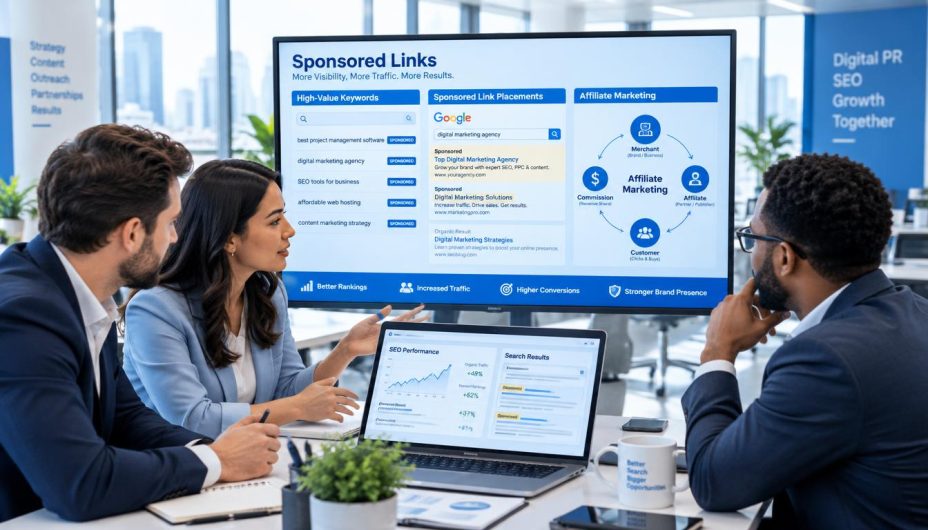
For digital PR and SEO, once an article is published, inspect exactly what it contains. An editorial link appears because the publisher independently decided that the referenced page is useful. An unlinked mention identifies the brand without a clickable URL. A paid placement is commercial, even if the article contains helpful information. These relationships should never be combined into one misleading “earned links” total.
In a digital PR and SEO report, record the source page, publication date, destination URL if any, quoted brand name, anchor text, and the current link relationship. A nofollow-qualified citation can still bring real people to the site and help them understand the source. It should not be sold as guaranteed search ranking value. For more detail, read our nofollow links and SEO explanation.
For digital PR and SEO teams, Google recommends rel="sponsored" for paid or affiliate relationships and rel="ugc" for user-generated links. A normal independent editorial citation does not require an invented dofollow attribute. Publishers may use nofollow where they do not wish to indicate the ordinary editorial association. These values help describe relationships and are treated as hints in Google’s systems. For the exact terminology, consult Google’s guidance on qualifying outbound links.
The distinction is especially important when digital PR and SEO teams share a budget with influencer or affiliate marketing. A sponsored article can be commercially worthwhile, but it should not be reported as independent journalism or as purchased ranking credit. Document the commercial terms and the publisher’s disclosure.
7. Protect Trust by Avoiding Manipulative Link Schemes
Earned coverage in digital PR and SEO is different from purchasing links primarily to influence search rankings. Warning signs include sellers guaranteeing followed links, private publisher networks, irrelevant mass guest posts, and demands for repeated exact-match commercial anchors. A legitimate campaign provides a genuinely useful reason for editorial attention instead of a hidden ranking transaction.
Digital PR and SEO programs should review Google’s Search spam policies before entering paid outreach arrangements. The policies identify link spam as links created primarily to manipulate rankings and describe problematic practices. The presence of an unfamiliar backlink alone is not evidence that a website has violated these rules.
Do not automatically disavow every site assigned a low score by a commercial backlink tool. Review the origin, context, pattern, and evidence before acting. Our disavow decision guide explains why broad cleanup can be unnecessary or harmful. If a major ranking change coincides with a reported Google update, use our confirmed Google update tracker instead of claiming that one media placement caused the shift.

8. Amplify Coverage Without Confusing Channels
In digital PR and SEO, after coverage appears, share it with relevant audiences through the brand’s website, newsletter, professional network, and social channels where permitted. A useful media mention can prompt direct visits, newsletter interest, search queries for the brand, or future editorial questions. These outcomes are not identical, and social engagement by itself does not prove search ranking improvement.
For digital PR and SEO, create a short summary explaining why the coverage matters and link to the publication when appropriate. Give readers a natural route to the original research and supporting resources. For example, an expert interview about a new technical problem can link to a detailed explanation or a checklist rather than forcing every interested visitor into a consultation form.
Visibility across AI-powered answers is another possible observation, but avoid claiming that press mentions guarantee citations inside any generative platform. Brand appearance, source citation, referrals, and qualified conversions need separate verification. Our LLMO checklist discusses credible external evidence and content foundations, while the AI Search & SEO resource hub explores emerging discovery methods.
9. Report Results With Clear Definitions and Appropriate Caution
Digital PR and SEO reporting should begin with verified outputs: articles published, qualified mentions, live referring pages, and journalist relationships. Then examine audience interactions such as identifiable referral sessions and completed business actions. Search Console can add context through search clicks, impressions, and query patterns, but it does not attribute every ranking change to an individual backlink.
When digital PR and SEO are evaluated together, use comparable reporting periods and record other meaningful events such as site redesigns, content refreshes, seasonal demand, and algorithm changes. Do not claim a 30% traffic increase was caused by one article simply because publication happened beforehand. A transparent report says what changed, what data supports it, what remains uncertain, and which action follows.
Our organic search metrics guide explains the differences between clicks, impressions, CTR, and other measures. The SEO Tools & Analytics resources can support reliable measurement, while the recurring SEO tasks checklist provides a schedule for link rechecks and content maintenance.

Digital PR and SEO: Earned Links vs Brand Mentions
For digital PR and SEO, an unlinked brand mention and an editorial backlink are not the same. A clickable link can send referral visitors directly to a resource and may provide search systems with additional context. An unlinked mention may expose the brand to a new audience or prompt people to search for it, but it is not a direct hyperlink between two webpages. Neither outcome should be priced or measured solely by a third-party authority score.
For digital PR and SEO, the media relationship also matters. Was the claim independently checked by a reporter? Was the article paid for? Did a subject-matter expert contribute a useful quote? Is the coverage relevant to the customer? These questions help assess quality more meaningfully than simply adding all appearances into a single total.
| Coverage Type | Direct Click Path? | Recommended Measurement | Important Caution |
|---|---|---|---|
| Independent editorial article with a link | Yes, if link is accessible | Live URL, context, referral visits | Do not claim a fixed amount of ranking credit |
| Unlinked publication mention | No direct hyperlink | Verified coverage, brand context, relevant awareness | Cannot count as a backlink |
| Newsletter reference | Sometimes | Qualified visits and tracked conversions | Attribution may be incomplete |
| Sponsored article | Often | Placement disclosure, referrals, commercial results | Not independently earned media |
| Forum discussion | Sometimes | Audience relevance and referrals | User links may use UGC qualification |
A Fictional Digital PR Campaign Example
For a digital PR and SEO example, consider a fictional home-efficiency company that publishes a regional study comparing household heating costs. The team documents the methodology, explains sampling limits, and builds a public landing page. It then contacts journalists who have recently written about energy affordability and offers an interview with a qualified analyst. This example is illustrative and does not represent a verified campaign or promised outcome.
Suppose the campaign earns three independently written articles, two linking to the original dataset and one mentioning the company without a link. One publication sends 60 identifiable referral sessions, and the website records four validated inquiries from those sessions. Those numbers should be described as campaign-specific observations, not a universal benchmark or proof of search ranking gains.
To evaluate digital PR and SEO responsibly, the team logs all published URLs, checks link attributes, confirms the source of referred visitors, and monitors branded queries in a separate report. The team also records that the company launched a new advertising campaign during the same period, making broad brand-demand attribution uncertain.
After publication, the team reviews reader questions and uses them to improve the original research page. It might add an accessible table explaining how household costs vary with property size or energy source. That improvement serves readers regardless of whether the next journalist chooses to include a backlink.
How to Measure Campaign Results
A useful digital PR and SEO dashboard distinguishes work, media reach, site behavior, and commercial outcomes. Build an evidence log that anyone on the team can audit. Treat exact values from proprietary discovery tools as tool-specific estimates; the data may not include every mention or backlink.
| Metric | Useful Source | What It Can Show | Limit |
|---|---|---|---|
| Published media coverage | Verified publication URLs | Number and relevance of confirmed stories | Not every article reaches the intended buyer |
| Unlinked mentions | Manual monitoring or alerts | Visible brand references | Not backlinks or direct referred clicks |
| Referring domains and links | Live page checks and backlink tools | Known hyperlink sources | Tool indexes are not exhaustive |
| Referral sessions | Web analytics | Identifiable visits from publications | Tracking and attribution can differ |
| Qualified inquiries | CRM and validated events | Potential customers meeting agreed criteria | Not all convert into sales |
| Organic search clicks | Search Console | Search interactions for relevant pages | Does not establish cause of change |
For digital PR and SEO, provide monthly coverage verification and a longer-term business review when appropriate. If your client needs a presentation-friendly summary, see the audit presentation template for ideas on clear evidence and priorities. Keep campaign reporting definitions consistent as sources and tools evolve.
Common Digital PR Mistakes to Avoid
- Buying ranking links: Do not confuse paid promotion with earned editorial references or ignore Google’s spam policies.
- Publishing unsupported statistics: Release original numbers only with a credible methodology and appropriate caveats.
- Pitching everyone: A large irrelevant mailing list is not a substitute for audience and editorial fit.
- Requiring an exact anchor: An independent publisher should control editorial wording.
- Counting unlinked mentions as backlinks: Report the two outcomes separately.
- Assuming all nofollow links are worthless: An appropriate reference can still send useful people to a site.
- Ignoring source accuracy: Check quotes, names, figures, URLs, and disclosures before promotion.
- Neglecting the destination: A broken or thin landing page wastes potential interest.
- Inventing results: Do not present hypothetical campaign stories or third-party claims as verified client results.
- Promising rankings: Media coverage and links do not assure any fixed search outcome.
Digital PR and SEO Campaign Checklist
- Define the audience, market, campaign objective, and success metrics.
- Choose an accurate story with a clear public-interest or audience benefit.
- Check research data, sampling, sources, quotes, and image rights.
- Publish a useful source page with clear methods and contact information.
- Check accessibility, mobile usability, correct URLs, and indexability.
- Build a shortlist of relevant publications and review their coverage.
- Pitch specific editorial value and respect contacts’ preferences.
- Disclose paid relationships and verify link qualification where relevant.
- Log linked articles, unlinked mentions, dates, and source contexts separately.
- Track verified referral sessions and qualified actions without inflating attribution.
- Review search trends as context, not as proof of backlink-driven gains.
- Revisit the original page when facts or audience questions change.
Frequently Asked Questions
What is the difference between digital PR and SEO?
Digital PR focuses on earning online attention through credible stories and relationships. SEO focuses on making useful web content discoverable and relevant to searchers. The two can complement each other, but they have different inputs and outcomes.
Can media mentions improve SEO without a backlink?
Unlinked mentions can introduce a brand to new readers and may lead to searches, direct visits, or future editorial citations. They are not hyperlinks and should not be described as passing a measurable amount of ranking credit.
Do editorial backlinks guarantee higher Google rankings?
No. A relevant editorial reference can be useful for discovery and may contribute contextual signals, but rankings depend on many systems and competing pages. An individual placement does not guarantee a better position.
Are nofollow links useful for digital public relations?
They can be. A clearly attributed citation may still direct readers to a valuable resource and increase recognition. Its relationship attribute should be reported accurately rather than presented as proof of guaranteed ranking value.
When should a paid article use a sponsored attribute?
Google recommends using rel="sponsored" for advertisements, affiliate references, and other compensated link placements. Publishers also need appropriate human-facing disclosures where required.
How can a small business get press coverage?
Start with a relevant local or industry question, gather accurate original information, identify suitable reporters, and offer a concise angle. Real expertise and useful details can be more persuasive than a large outreach budget.
What should be included in a PR performance report?
Include verified coverage, publication relevance, linked and unlinked mentions, link attributes, referral visits, business actions, and relevant search context. Explain measurement limitations and avoid causal claims not supported by evidence.
Can digital PR help a company appear in AI-generated answers?
Credible third-party sources can be relevant to brand discovery, but no campaign can guarantee a mention or citation in any particular AI system. Monitor observed appearances and actual referral outcomes separately.
Should a brand request a link whenever a journalist mentions it?
Only when a direct citation would genuinely help readers verify or explore the underlying source. A polite correction or source offer can be appropriate, but avoid pressure or demands for keyword-rich anchors.
Conclusion
Digital PR and SEO are most effective when they begin with trustworthy information and a real audience need. Research, expert commentary, and useful source pages can earn independent attention. Search-friendly content and a usable website help interested readers continue their journey, whether they arrive through a publisher link or a later search.
Measure linked coverage, unlinked mentions, referral visits, and business outcomes honestly. Correct claims that cannot be verified, qualify commercial links appropriately, and avoid treating backlink counts as a ranking guarantee. For more guidance about sustainable digital visibility, visit the Online SEO Blogs homepage. Readers who want to verify our standards can review the publication overview or contact the editorial team.