Featured Snippets: 9 Proven Steps for Better Visibility
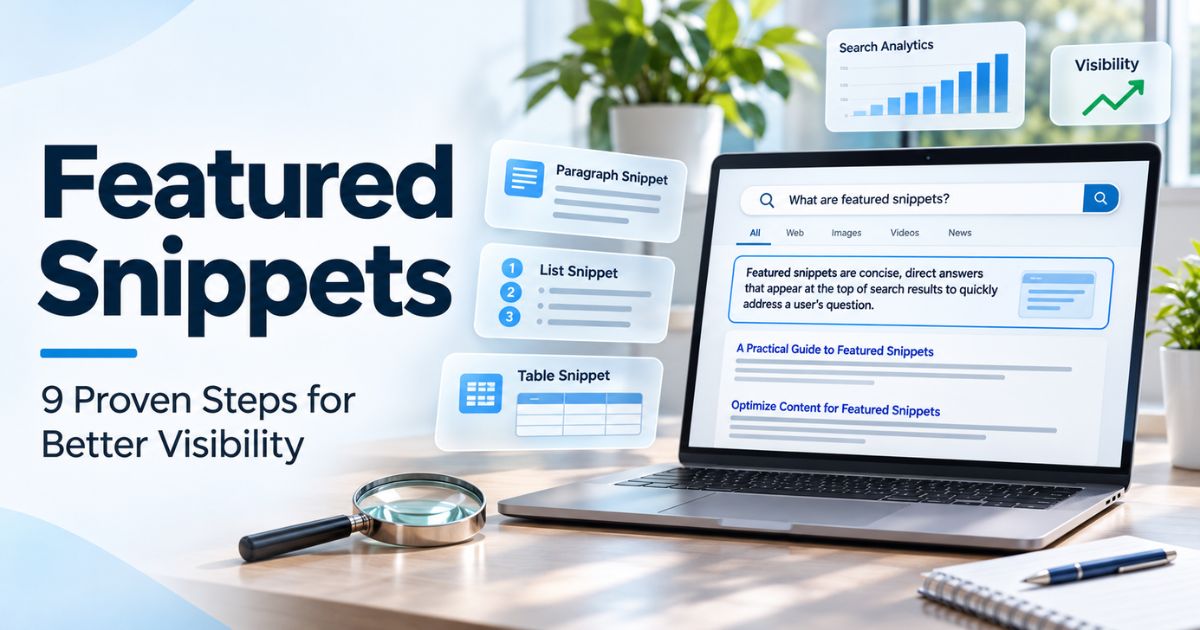
Featured snippets are highlighted answers that Google may display prominently in its search results. They can help searchers understand a definition, follow a process, or compare information without having to scan several ordinary listings first. To improve your chances of being selected, answer the real question clearly, choose a suitable format, and make the source page useful from beginning to end.
Learning how to optimize for featured snippets is not about adding a special tag or forcing an answer into exactly 40 words. Google decides which pages and passages to feature. Your work is to understand the query, provide an accurate response, and make the surrounding page easy for people and crawlers to use.
This guide covers nine practical optimization steps, examples of answer formats, measurement advice, and common mistakes. For a wider foundation, see our practical SEO improvement guide.
Key Takeaways
- Featured snippets are selected automatically by Google; there is no markup that guarantees inclusion.
- Start with relevant search queries and examine the current results before rewriting a page.
- Use direct, self-contained answers beneath descriptive headings where the reader expects them.
- Choose paragraphs for definitions, numbered lists for sequences, and tables for genuine comparisons.
- Preserve content accuracy, mobile readability, crawlability, and helpful supporting detail.
- Featured snippets can appear in different search contexts and do not guarantee more clicks or conversions.
- Measure page and query performance over time rather than relying on one screenshot or an assumed position-zero ranking.
What Are Featured Snippets in Google Search?
Featured snippets are special Google Search results that prominently show information extracted from a web page, together with a link to the source. They are sometimes described as answer boxes. Google may present this treatment at the top of results or within related-question experiences, depending on the query and interface.
For example, a query asking “What is a canonical URL?” might display a short explanation from a relevant page, while “How do I change a bicycle tire?” might show an ordered sequence. The appropriate answer depends on what the searcher wants, not the number of keywords repeated in the source.
Featured snippets are not the same thing as Google’s AI Overviews. A traditional featured snippet highlights content from a specific source page; an AI Overview is a different search experience that can synthesize information and show supporting links. People Also Ask is an expandable question interface that may itself contain snippet-like answers. Avoid treating all three as identical reporting categories.
Our keywords versus SEO explainer provides useful context: the language of a query matters, but the page must also satisfy the need behind it.
Which Featured Snippet Formats Should You Target?
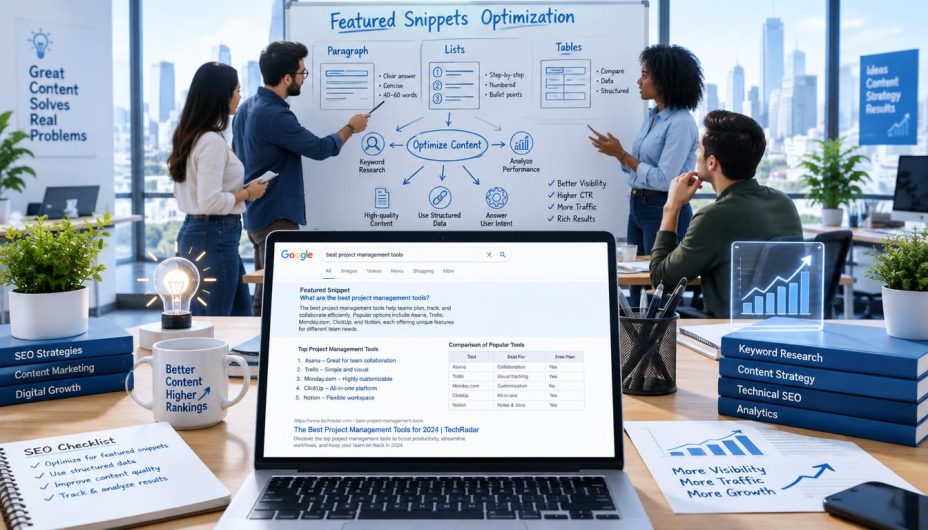
Google can present featured snippets in formats suited to the question. A clear definition may be best served by a paragraph, a process may need numbered steps, and a comparison may be easiest to understand in a table. Some search experiences can also highlight video content, but you should verify the actual result format rather than assume a standard layout.
| Answer Format | Typical Search Intent | Helpful Page Structure |
|---|---|---|
| Paragraph | What is something? Why does it happen? | Question heading followed by a direct explanation |
| Numbered list | How do I complete a task? | Short introduction and ordered steps |
| Bulleted list | Which factors or examples matter? | Meaningful grouped items |
| Table | What is the difference between two options? | Accessible comparison with descriptive headers |
| Video-related result | Can I see how a physical task works? | Useful video with clear title and supporting explanation |
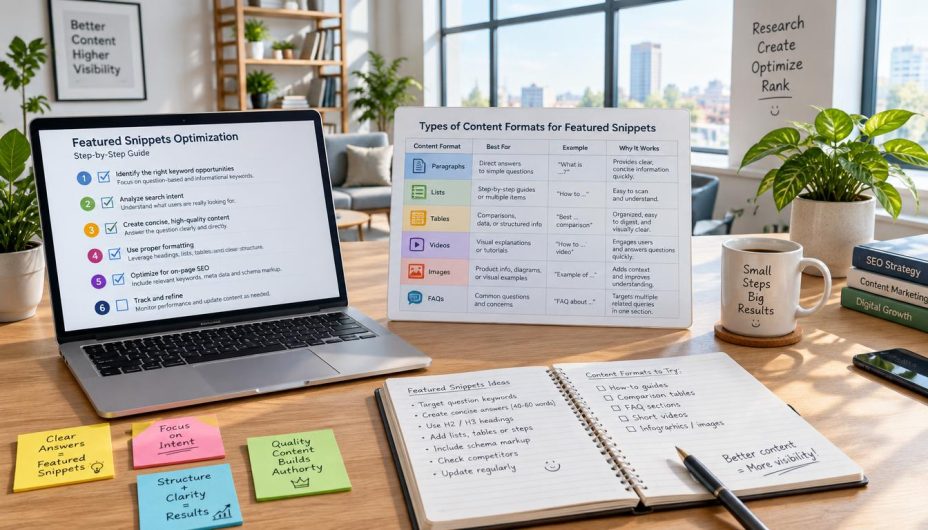
There is no universal answer length that guarantees featured snippets. A compact paragraph can be helpful, but the right length depends on the complexity of the question. Avoid cutting important qualifications to meet an arbitrary word count. For planning content types around real search needs, see our content mapping framework.
How to Optimize for Featured Snippets: 9 Proven Steps
1. Find Queries That Deserve Direct Answers
The first optimization step is to identify specific informational queries where a clear answer would help. Start with questions that your audience actually asks, including “what,” “why,” “how,” and comparison searches. Avoid producing a page for every slight wording variation; related questions can often be answered in one well-organized resource.
Open Google Search Console and review queries that already generate impressions for your relevant pages. A page with meaningful impressions but limited clicks may deserve closer inspection, although this pattern alone does not show that a featured snippet is available. Our SEO metrics guide explains how clicks, impressions, CTR, and average position should be interpreted.
For featured snippets research, also look at actual search results in the intended country and language. Note whether a highlighted answer exists, which webpage it references, and what kind of answer is displayed. Keep a shortlist of queries with a genuine content fit rather than relying on search-volume estimates alone.
2. Study the Current Search Results and Intent
Before changing content, inspect the page currently being highlighted and several other relevant results. What is the user trying to accomplish? Is the query asking for a definition, a calculation, a comparison, or a procedure? Which details would make the answer misleading if omitted?
Featured snippets often reflect the format Google considers useful for a query, but one snapshot is not a permanent rule. Results can differ by location, device, and time. Record the date, query, result type, and competing source so you can explain your editorial decision later.
For international topics, wording and expected formats may vary across markets. Our international keyword research guide shows how to validate terms by region. When a query is geographically sensitive, check its local search intent before assuming that a general page serves every location.
Match the intent first. A product category page should not be rewritten as a long definition solely because you hope to earn featured snippets for an informational query.
3. Put a Clear Answer Directly Below the Relevant Heading
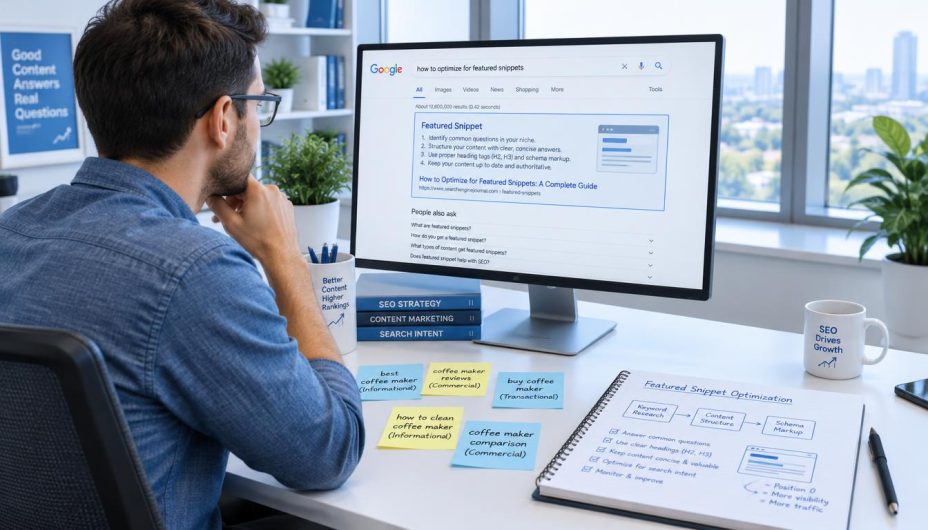
When a visitor asks “What is an XML sitemap?” the page should explain the term before moving into exceptions or advanced advice. A concise opening answer makes the content easier to understand and gives the rest of the section a clear purpose.
For featured snippets, write a self-contained explanation that still makes sense when separated from the surrounding paragraphs. Identify the subject explicitly, use precise terminology, and avoid opening with filler such as “In today’s digital world.” Then expand with practical examples, limitations, and next steps for readers who need more depth.
An example of an answer-first paragraph is: “An XML sitemap is a structured file listing URLs a website owner wants search engines to discover. It helps with finding pages but does not guarantee crawling or indexing.” That concise statement can be followed by instructions for generating and submitting the file. Readers who need those details can continue with our XML sitemap optimization guide.
Do not write the answer to imitate a competitor word for word. Featured snippets should come from accurate, original explanations that are useful even if Google never highlights them.
4. Use Ordered Lists for Processes and Bullets for Groups
When a question asks for steps in sequence, use a normal HTML <ol> list with meaningful steps. When the order does not matter, use <ul> instead. Proper list markup improves the reading experience and gives search systems an understandable representation of the content.
For example, a three-step process to inspect a page in Search Console could be presented as:
- Open the correct verified Search Console property.
- Enter the exact page URL in the URL Inspection tool.
- Review the reported indexing and canonical information before deciding whether any action is needed.
Keep items specific enough to be useful. A list consisting only of “research, optimize, monitor” does not explain a real task. If a process has many stages, group them logically with supporting headings instead of forcing every detail into one enormous list.
Featured snippets may use list-formatted answers for procedural searches, but there is no guarantee that Google will reproduce your exact list. For a broader recurring workflow, explore our daily, weekly, and monthly SEO tasks checklist.
5. Build Accessible Comparison Tables When They Add Value
A comparison question may be easier to answer in a table than in a dense paragraph. Use real table headers, concise rows, clear terminology, and context explaining what is being compared. A table should be usable on mobile and meaningful to people using assistive technology.
For featured snippets, prefer genuine comparisons over decorative tables added solely for a search feature. Do not invent prices, statistics, or performance claims to fill cells. When comparing two technical options, identify the precise differences and explain any limitations beneath the table.
| Content Need | Less Helpful Approach | Better Approach |
|---|---|---|
| Definition | Three paragraphs before defining the term | Direct definition followed by details |
| Process | Steps hidden in one block of text | Ordered list with actionable instructions |
| Comparison | Scattered claims with no criteria | Table of clearly labeled differences |
| Frequently asked question | Vague promotional introduction | Specific answer supported by context |
Our Content SEO & Marketing resources offer additional guidance on choosing useful formats, while the site architecture guide explains how readers should move between related content.
6. Improve Accuracy and Add Useful Supporting Context
Short answers are valuable only when they are correct. Verify definitions, technical procedures, current product details, dates, and other material claims. A medical, legal, or financial answer may require more qualifications and stronger sourcing than a simple explanation of HTML formatting.
To improve featured snippets eligibility, make the entire source page trustworthy, not just the opening sentence. Include examples readers can follow, meaningful headings, clear authorship where appropriate, and updated information when facts change. Avoid unsupported claims that a page will “win position zero” after an edit.
For a page discussing ranking competition, for example, explain that a third-party difficulty score is an estimate and not an official Google metric. For a page about content structure, distinguish user experience advice from confirmed ranking factors. Our SEO reporting guide can help connect accurate explanations to real performance evidence.
Featured snippets can be useful for visibility, but Google decides which content qualifies. Good editorial standards remain worthwhile even if the same page appears as an ordinary search result.
7. Check Crawlability, Indexing, and Internal Links
A strong answer cannot participate in ordinary web search if important technical restrictions prevent Google from accessing or indexing the page. Confirm that your preferred URL is crawlable, returns the intended status, and is not accidentally marked noindex. Where pages are similar, align canonical signals and internal links around the preferred version.
Featured snippets are selected from web content, not generated simply because a site has a sitemap or schema. There is no dedicated featured-snippet structured-data type that guarantees selection. Google explains this in its official featured snippets guidance. Adding FAQ or HowTo markup also does not make the page eligible automatically for this particular treatment; use supported structured data only when it describes visible content accurately.
Audit the site’s pathways as well. Use descriptive links from relevant parent topics and supporting pages so readers can reach the article. See our technical SEO audit resource, canonical pagination guide, and technical SEO knowledge hub for related checks.
Do not add special markup or manipulate a page’s links merely to chase featured snippets. The technical goal is reliable discovery and clear information architecture.
8. Keep Images, Mobile Experience, and Page Layout Useful
Images can clarify a procedure, show a product detail, or explain a chart. Provide descriptive alternative text when an image conveys useful information and avoid repeating the same phrase in every alt attribute. A meaningful visual should support the text, not replace an answer that readers and crawlers need to understand.
Test your page on mobile. Make headings visible, keep lists easy to scan, ensure table content remains accessible, and reduce distracting pop-ups. Large images should not cause unexpected layout shifts. If a reader cannot find the explanation easily, the page needs improvement regardless of whether it earns featured snippets.
Internal navigation also helps users move from a short answer to a deeper reference. For adjacent topics such as AI-powered answers and source citation, compare our LLMO checklist and competitor visibility in LLMs guide. Those are related search experiences, not proof that the same optimization tactic controls every platform.

9. Measure Search Performance and Recheck the Live SERP
After making a meaningful improvement, record the edit date, the targeted queries, and the current search-result appearance. Return to the live results periodically to see whether the highlighted answer or its source changed. A single manual check is a snapshot, not a reliable measure of long-term coverage.
Use Google Search Console to monitor query-level clicks, impressions, CTR, and average position over comparable periods. Google’s documentation explains that featured snippets typically occupy position one when they are the topmost result, so the popular phrase “position zero” is not a literal Search Console position. The report does not by itself provide a complete, dedicated inventory of every featured snippet your site owns.
For measurement definitions, consult the official Google Search Console explanation of clicks, impressions, and position. Also review our SEO Tools & Analytics resources for practical reporting workflows.
Featured snippets may increase visibility for a query but cannot promise more organic sessions or conversions. Check what happened after people clicked, and note when changes in search demand or other result features could explain the trend.
Featured Snippets Versus People Also Ask and AI Overviews
Because search layouts evolve, it helps to describe each feature accurately before tracking it. Featured snippets prominently extract content from a specific source; People Also Ask presents expandable related questions and may display snippets inside answers; AI Overviews are a separate AI-generated experience with supporting links. The same page might appear in different ways for different queries.
A useful practical distinction is the source and the interaction. When you report featured snippets visibility, record the page selected, the query, and the result context. If the observation is an AI Overview citation, label it separately. Our AI Search & SEO guides cover the broader changes affecting how information is discovered.
Common Featured Snippet Optimization Mistakes
- Assuming a guaranteed formula: Google chooses featured snippets automatically and offers no mandatory answer length.
- Copying a competing answer: Write accurate, original explanations with useful context instead of imitating another page.
- Ignoring search intent: A paragraph may not suit a query that clearly asks for ordered steps or comparisons.
- Stuffing keywords into headings: Natural wording is more helpful than repeating the same phrase throughout a page.
- Expecting schema to force selection: FAQ or HowTo structured data is not a featured-snippet switch.
- Confusing result types: A featured snippet, a People Also Ask answer, and an AI Overview are not the same measurement category.
- Reporting clicks without context: Search appearance, query demand, device, and page relevance can change results.
- Changing successful URLs unnecessarily: Avoid migrations solely to satisfy a plugin recommendation.
Featured Snippets Optimization Checklist
- Choose a relevant query and document the audience’s actual need.
- Inspect the current Google results in the intended market and device context.
- Identify whether a definition, procedure, comparison, or other format is most useful.
- Place a direct, accurate answer below a descriptive heading.
- Use proper HTML paragraphs, lists, and tables rather than decorative layout hacks.
- Add meaningful examples, qualifications, and supporting details.
- Check that images have appropriate alternative text and work on mobile.
- Confirm the page is crawlable, indexable, and linked from related content.
- Record the baseline search appearance, clicks, impressions, and queries.
- Review results later without promising snippet ownership or traffic gains.
Frequently Asked Questions
What are featured snippets?
Featured snippets are highlighted results in Google Search that display a short answer or extract from a web page with a link to the source. Google automatically selects the passage it considers useful for a query.
Can I make Google show my page as a featured snippet?
No. Google determines whether a page is suitable. You can improve clarity, usefulness, formatting, and technical accessibility, but no markup or optimization guarantees selection.
How long should a featured snippet answer be?
There is no fixed required word count. Write a concise, accurate answer that fully addresses the question, then add detail beneath it when readers need more context.
Which HTML elements help with answer formatting?
Use clear headings, regular paragraphs for explanations, ordered lists for sequences, unordered lists for grouped ideas, and accessible tables for comparisons. Pick elements for readers first.
Is a featured snippet the same as an AI Overview?
No. A traditional featured snippet extracts information from a specific page. An AI Overview is a separate AI-generated search experience that can show supporting source links.
Does FAQ schema guarantee featured snippets?
No. Structured data does not provide a switch for this feature. Only use markup that accurately represents visible content and fits Google’s applicable feature requirements.
Does position zero exist in Google Search Console?
“Position zero” is an informal marketing phrase. In Search Console, a featured snippet appearing as the topmost result typically occupies position one under Google’s position reporting rules.
How can I track featured snippet performance?
Combine manual checks of the actual search result with Search Console’s query, page, clicks, impressions, CTR, and average-position trends. Document dates and conditions because the displayed answer can change.
Conclusion
Featured snippets reward no guaranteed trick. The best preparation is to understand what a searcher needs, answer it clearly, choose a helpful format, and support that answer with trustworthy information on a technically accessible page.
Keep your research and measurements honest. Search features and competitors change, so revisit important pages when facts or user needs change rather than rewriting content simply to force an SEO score. For more practical advice, browse the Online SEO Blogs article library.