
Google Discover SEO: 10 Powerful Ways to Improve Visibility

Google Discover SEO is the process of making content more eligible, useful, visually compelling, and technically accessible for Google’s personalized Discover feed. Unlike traditional Search, Discover can recommend content before a user enters a query, based on interests and activity.
Effective Google Discover SEO does not depend on a secret ranking factor or special schema. Focus on indexed, policy-compliant pages, original and timely content, accurate headlines, strong large images, a good mobile experience, clear topic expertise, and ongoing measurement in Google Search Console.
Key Takeaways
What Is Google Discover SEO?
Google Discover SEO refers to improving a website and its content for the possibility of appearing in Google Discover, a personalized content feed that recommends articles and other media based on a user’s interests.
Discover differs from normal query-driven Search. Users do not need to type a keyword before seeing an article. Google can proactively surface content it believes is relevant to that person’s interests.
Google’s official Discover documentation says content is automatically eligible when it is indexed and complies with Discover’s content policies. No special tags or structured data are required specifically for eligibility.
This makes Google Discover SEO less about targeting one exact keyword and more about publishing content that is useful, trustworthy, timely, visually strong, and relevant to a recognizable audience interest.
For broader organic-search foundations, review our practical SEO improvement guide, main SEO hub, and keywords versus SEO guide.
How Google Discover Works
Google Discover SEO needs a different mindset because the feed is personalized rather than based solely on a typed query.
Google says Discover shows content related to people’s interests using information connected with their Web and App Activity. The feed may show current articles, evergreen content, videos, and other material when Google believes it is useful to that individual.
This means two people can see different feeds even when they visit Discover at the same time.
Discover can react to:
- Changing user interests
- Recent search activity
- Topics a user repeatedly follows
- Current events and timely subjects
- Creator or source preferences
- Location-related interests
Because of this personalization, Google Discover SEO should be treated as an additional discovery channel rather than a replacement for traditional Search traffic.
10 Powerful Ways to Improve Google Discover SEO
1. Confirm Discover Eligibility First
Before trying advanced Google Discover SEO tactics, make sure the page can actually appear.
Google says a page must:
- Be indexed by Google
- Comply with Discover content policies
- Comply with Google Search policies
- Comply with Google’s spam policies
There is no special Discover schema that needs to be installed.
If an article is not indexed, fixing its headline or hero image will not solve the underlying eligibility problem.
Use our technical SEO audit framework and Technical SEO hub to check indexing, canonicals, crawlability, robots directives, and technical accessibility.

2. Publish People-First Content With Original Value
Strong Google Discover SEO starts with useful content rather than feed manipulation.
Google says Discover uses many of the same signals and systems as Search when evaluating helpful, people-first content.
Content should offer something worth discovering, such as:
- Original analysis
- Firsthand experience
- Expert commentary
- Useful research
- Timely reporting
- Unique examples
- Clear explanations
- Fresh perspectives
Google’s people-first content guidance recommends asking whether a page offers substantial value compared with competing results and whether people would want to bookmark, share, or recommend it.
For content-focused optimization, use our Content SEO & Marketing hub and broader article library.
3. Build Clear Topic Expertise
The February 2026 Discover core update made topic-level expertise even more relevant to Google Discover SEO.
Google said the update was designed to show more in-depth, original, and timely content from websites with expertise in a particular area. Its systems can evaluate expertise topic by topic rather than requiring an entire site to cover only one subject.
That supports a cluster-based publishing model.
For example, Online SEO Blogs connects:
- Google update coverage through the Google Search Updates hub
- AI-search content through the AI Search & SEO hub
- Technical guidance through the Technical SEO category
- Analytics content through the SEO Tools & Analytics hub
A one-off article on an unrelated topic provides less topical context than a well-developed cluster of genuinely useful content.
Our foundational SEO with AI guide also explains why clear entities, relationships, and subject depth matter across modern search systems.
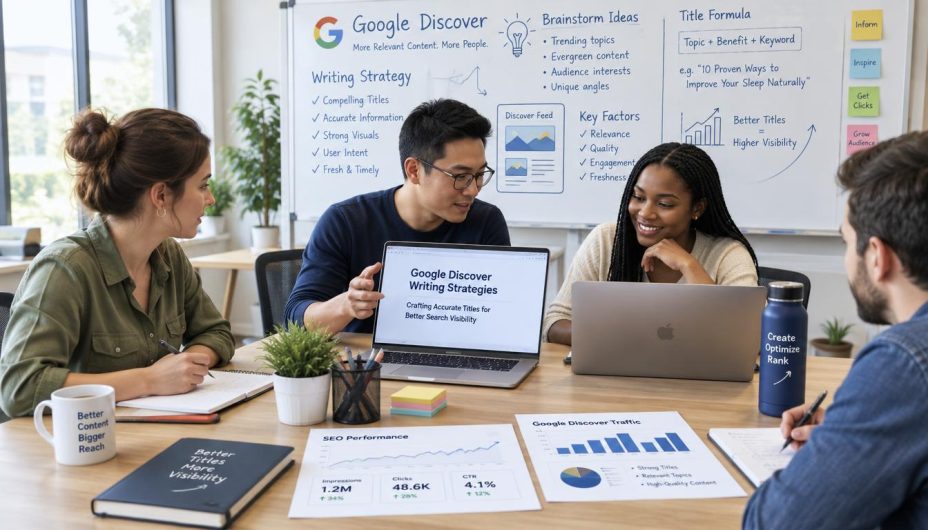
4. Write Accurate, Compelling Headlines
Titles are important in Google Discover SEO, but sensationalism is not the goal.
Google specifically advises publishers to avoid:
- Misleading preview text
- Exaggerated claims
- Sensational headlines
- Withholding important information purely to generate clicks
- Shock-based curiosity tactics
A strong Discover headline should capture the essence of the article and give readers a clear reason to care.
| Weak Approach | Better Approach |
|---|---|
| You Won’t Believe What Google Just Did! | Google February 2026 Discover Update: What Changed |
| This SEO Trick Changes Everything | 10 Practical Ways to Improve Discover Visibility |
| Google Is Destroying Your Traffic | Why Discover Traffic Can Fluctuate and How to Analyze It |
Our editorial policy follows the same principle: clearly separate verified facts from speculation and avoid exaggerated claims.
5. Use Large, High-Quality, Relevant Images
Images are one of the most important presentation elements in Google Discover SEO.
Google currently recommends using compelling, relevant images that:
- Are at least 1,200 pixels wide
- Have high resolution
- Work well in landscape presentation
- Represent the actual article
- Are not generic site logos
- Avoid being heavily text-based
- Are enabled for large previews
Google recommends the max-image-preview:large directive, or AMP, so eligible pages can display large previews.
The current Discover documentation also says Google can use schema.org image information and the og:image meta tag when selecting a preferred image.
Google’s image SEO guidance recommends selecting a high-resolution image that is relevant and representative of the page.
This fits our existing image workflow: topic-specific editorial images, no fake statistics, no irrelevant logos, and no headline-heavy graphics.
6. Create a Strong Mobile Experience
Google Discover SEO is strongly connected with mobile consumption, so the page must be easy to use on smaller screens.
Focus on:
- Responsive layouts
- Readable font sizes
- Short paragraphs
- Clear headings
- Fast-loading images
- Simple navigation
- Limited intrusive overlays
- Accessible buttons and links
A visually attractive Discover card cannot compensate for a poor article experience after the click.
Technical problems should be addressed through the technical SEO audit process, while general improvements can be guided by our SEO improvement framework.
7. Use Relevant Images and Video Only When They Add Value
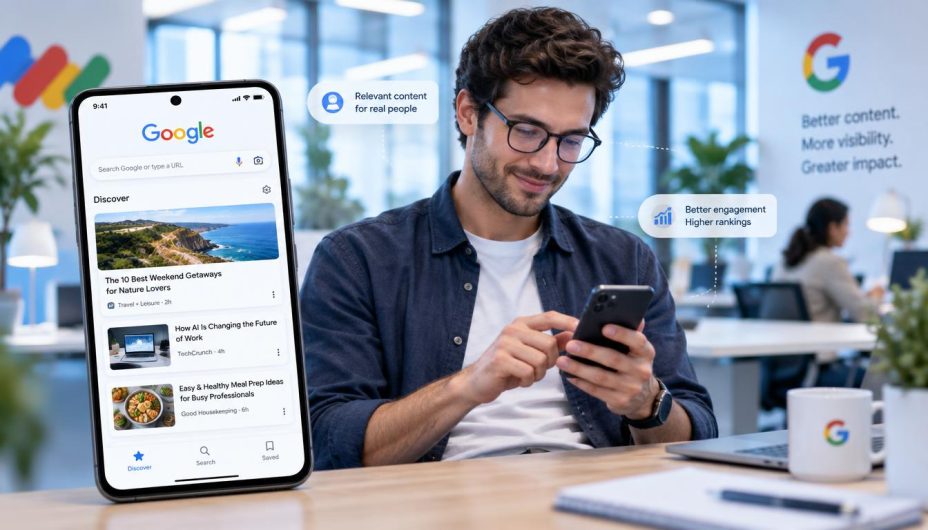
Media can support Google Discover SEO when it genuinely improves the article.
Do not add a video simply because video is available as a Discover appearance type. A demonstration, interview, visual explanation, or original footage can strengthen a page when it helps the audience understand the topic.
Our guide on whether a video podcast can help SEO explains the same broader rule: media should support user value rather than exist solely as an optimization tactic.
Relevant media should also be:
- Properly sized
- Accessible
- Fast enough for mobile use
- Contextually connected to the article
- Free from misleading thumbnails
8. Strengthen Trust, Transparency, and Publishing Signals
Trust supports Google Discover SEO because Discover’s policies emphasize transparency.
Google’s Discover content policies recommend clear information about authors, publishers, publication dates, and contact details.
For an editorial site, maintain:
- Visible bylines
- Real author profiles
- Original publication dates
- Meaningful Last Updated dates
- About information
- Contact information
- Editorial standards
These practices also support our broader evidence-led publishing standards.
When Google updates systems that affect Discover, monitor the Google Algorithm Update Tracker, core update guide, and Google Search Updates archive.
9. Measure Discover Performance in Search Console
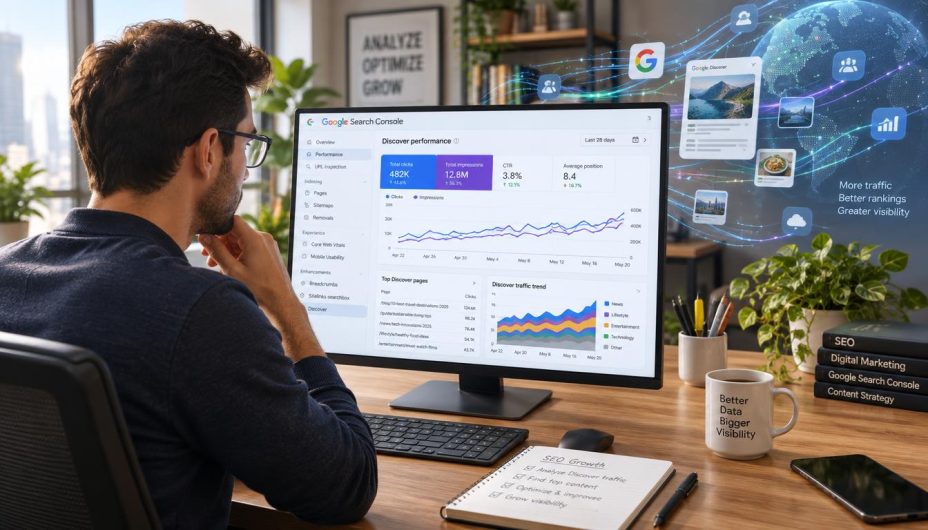
A strong Google Discover SEO workflow includes measurement in Google Search Console.
The Discover Performance report can show:
- Clicks
- Impressions
- CTR
- Pages
- Countries
- Dates
- Discover appearance types where applicable
Google notes that the report only appears when a property reaches a minimum level of Discover impressions.
Use Google’s Discover Performance report documentation to understand how the data is aggregated and filtered.
Do not evaluate one traffic spike in isolation. Compare broader trends and identify which content patterns repeatedly earn visibility.
For general measurement workflows, use our SEO Tools & Analytics hub.
10. Expect Discover Traffic to Fluctuate
One of the most important lessons in Google Discover SEO is that traffic can be significantly less predictable than keyword-driven Search traffic.
Google lists several reasons Discover exposure can change:
- User interests change
- Google changes the content types shown in the feed
- Search and Discover systems are updated
- A topic becomes more or less timely
- Source or creator preferences change
Do not treat a Discover drop as proof that the website received a penalty.
If visibility changes sharply, compare the dates with our algorithm update tracker and use the SERP volatility framework to separate confirmed events from normal movement.
For confirmed core changes, our Google core update guide explains why evidence-based analysis is safer than rapid site-wide edits.
What Changed With the February 2026 Discover Core Update?
The February 2026 Discover core update is especially relevant to current Google Discover SEO.
Google said the update was designed to:
- Show more locally relevant content from websites based in a user’s country
- Reduce sensational content and clickbait
- Surface more in-depth content
- Reward original and timely material
- Better recognize topic-specific expertise
You can read Google’s official February 2026 Discover core update announcement.
This reinforces a simple Google Discover SEO strategy: build real expertise around topics, publish original value, use honest previews, and create content people genuinely want to read.
It also supports keeping unrelated or thin content out of a topical cluster. Our Google spam update guide provides additional context on why mass-produced low-value content can create broader search risk.
Google Discover SEO and Generative AI Features
Search Console now also includes reporting related to generative AI features in Discover for eligible properties with sufficient impressions.
Google’s 2026 documentation says these reports can help site owners understand which pages receive impressions from generative AI features in Discover and where those impressions originate.
This does not create a separate set of Google Discover SEO fundamentals.
The same priorities remain useful:
- Crawlable and indexed pages
- Clear entities and topics
- Original information
- Reliable sourcing
- Strong images
- Useful media
- Transparent authorship
- Good page experience
For broader AI-search strategy, review our foundational SEO for AI guide and the AI Search & SEO hub.
Common Google Discover SEO Mistakes
Using clickbait titles
Google Discover SEO should not depend on exaggerated headlines, hidden information, or shock-based previews.
Using small or generic images
A logo or low-resolution generic graphic is weaker than a relevant high-resolution editorial image that accurately represents the article.
Expecting special schema to guarantee Discover traffic
Google says no special structured data is required for Discover eligibility.
Publishing outside your site’s real expertise
A random article created only because a topic is trending may not strengthen the site’s topical identity or audience relationship.
Updating evergreen content without adding value
Changing a date alone is not a meaningful refresh. Update articles when facts, examples, guidance, or usefulness genuinely improve.
Overreacting to Discover traffic drops
Discover traffic can fluctuate substantially even when content quality has not declined.
Ignoring technical SEO
A compelling article still needs to be crawlable, indexed, canonicalized correctly, and accessible on mobile.
Using unrelated links as an optimization tactic
Internal and external links should support the topic. For link-specific questions, use our nofollow links SEO guide and Off-Page SEO & Link Building hub rather than turning link attributes into a Discover ranking theory.
Google Discover SEO Checklist
- Confirm that the article is indexable and indexed.
- Check canonical tags and crawlability.
- Review Discover and Search content policies.
- Publish original, useful, people-first content.
- Stay within topics where the site can demonstrate genuine expertise.
- Use accurate, descriptive headlines.
- Avoid clickbait and sensational previews.
- Use a relevant image at least 1,200 pixels wide.
- Use high-resolution landscape-friendly imagery.
- Enable
max-image-preview:large. - Set an appropriate preferred image through supported metadata.
- Keep mobile layouts fast and readable.
- Limit intrusive ads and overlays.
- Show real authorship and publisher information.
- Keep publication and update dates accurate.
- Use internal links to relevant topical resources.
- Monitor Discover performance in Search Console.
- Compare trends rather than one-day spikes.
- Check confirmed Google updates before reacting to traffic changes.
- Refresh content only when the update adds meaningful value.
This checklist keeps Google Discover SEO focused on sustainable publishing rather than shortcuts.
Frequently Asked Questions
What is Google Discover SEO?
Google Discover SEO is the process of improving content quality, eligibility, presentation, technical accessibility, and audience relevance to increase the likelihood that content may appear in Google’s personalized Discover feed.
Do I need special schema for Google Discover?
No. Google says no special tags or structured data are required specifically for Discover eligibility. Content must be indexed and comply with applicable policies.
How large should Discover images be?
Google currently recommends relevant, high-quality images that are at least 1,200 pixels wide and enabled for large previews with max-image-preview:large or AMP.
Does appearing in Discover require fresh news?
No. Discover can show both timely and older content when it remains helpful and relevant to a person’s interests. However, current interests and timely topics can influence what is surfaced.
Why did my Google Discover traffic suddenly drop?
Discover traffic can change because user interests shift, Google adjusts content types in the feed, ranking systems change, or a topic becomes less relevant. A traffic decline does not automatically mean the site was penalized.
Can I see Google Discover traffic in Search Console?
Yes, when the property reaches Google’s minimum impression threshold. The Discover Performance report can show impressions, clicks, CTR, pages, countries, dates, and supported appearance types.
Does clickbait help Google Discover SEO?
No. Google’s Discover guidance specifically recommends avoiding misleading, exaggerated, and sensational preview content. Headlines and images should accurately represent the article.
Can a Google core update affect Discover?
Yes. Google states that Search updates can sometimes cause Discover traffic changes. Google also released a dedicated Discover core update in February 2026.
Conclusion
Google Discover SEO works best when a publisher focuses on genuine usefulness rather than trying to reverse-engineer a personalized feed.
Strong Google Discover SEO starts with indexed, policy-compliant content and continues with original information, topic expertise, honest headlines, large relevant images, good mobile usability, transparent authorship, and careful performance analysis.
The February 2026 Discover core update reinforces the same direction: useful, original, timely, in-depth content and less sensationalism.
Most importantly, Google Discover SEO cannot guarantee impressions or clicks. Treat Discover as a valuable supplemental discovery channel and evaluate performance over time rather than expecting every article to appear.
Continue with our Google Algorithm Update Tracker, core update guide, Google Search Updates hub, Content SEO resources, SEO analytics resources, and the Online SEO Blogs homepage for supporting guidance.