
SERP Volatility: 9 Essential Steps to Analyze & Respond

SERP volatility means noticeable movement in search-result positions over time. Some movement is normal, while larger shifts can come from Google ranking updates, technical problems, changing search intent, stronger competitors, seasonality, or changes to the search-results page itself. The safest response is to confirm the pattern with data before changing pages that may still be performing well.
If you see sudden SERP volatility, first compare affected pages and queries in Google Search Console, check whether Google has confirmed an update, rule out technical problems, and then make evidence-based improvements rather than panic-driven edits.
Key Takeaways
What Is SERP Volatility?
SERP volatility describes how much search engine result pages change over a period of time. A page that ranks third today may move to fifth, second, or outside the top ten later. Some movement is expected because search results are dynamic rather than permanently fixed.
Google continually improves its ranking systems, publishers update pages, new competitors appear, search demand changes, and different result features can affect what users see. Google’s ranking systems documentation explains that multiple automated systems and signals are used to determine which results are most useful for a query.
That means SERP volatility should be treated as a measurement signal, not a diagnosis by itself. A volatile keyword does not tell you why the change happened. You need supporting evidence.
For broader SEO fundamentals, review our practical guide to improving SEO and the main SEO resource hub.
Why SERP Volatility Happens
SERP volatility can result from several causes at the same time. Before assuming your site has been penalized, separate normal ranking movement from wider changes.
Google ranking-system updates
Google makes broad core updates several times a year and also makes smaller ranking-system changes between major announced updates. During a rollout, rankings can move as Google’s systems reassess results.
Use our Google Algorithm Update Tracker to distinguish confirmed rollouts from unconfirmed SERP volatility. For deeper context, see our Google core update guide and the Google Search Updates archive.
Spam-system changes
Ranking movement can also occur around spam updates. A spam update is different from a core update and should be evaluated against Google’s spam policies rather than assumed to be a general content-quality reassessment.
Our March 2026 spam update guide explains how to review a confirmed spam rollout without treating timing alone as proof of causation.
Technical SEO problems
A ranking drop may have nothing to do with a ranking-system update. Indexing errors, accidental noindex directives, redirect problems, canonical changes, broken internal links, server failures, migrations, or crawlability issues can all reduce search visibility.
If SERP volatility appears soon after a site change, start with the technical SEO audit framework and browse the Technical SEO hub before rewriting content.
Search intent changes
Search intent is not static. A query that once favored tutorials may begin showing tools, product pages, news, videos, local results, or fresh discussions. Google may also interpret a query differently as user behavior changes.
Keyword choice alone is therefore not enough. Our guide explaining the difference between keywords and SEO is useful when SERP volatility reflects a broader intent mismatch rather than a technical problem.
Competitor improvements
Your page can lose position even when nothing is technically wrong with it. A competitor may publish a clearer answer, update stale information, improve internal linking, add original evidence, or better satisfy the query.
This is especially common in competitive commercial markets. Our B2B SEO guide and SEO for cannabis companies guide show how different industries can require different search strategies.
Local and geographic differences
Rankings can differ by country, city, device, and local context. If a business depends on geographically sensitive queries, apparent SERP volatility may partly reflect location rather than a site-wide ranking change.
See our local SEO for real estate guide and the wider Local SEO category for examples of location-sensitive search visibility.
How to Measure SERP Volatility Correctly
You cannot respond well to SERP volatility if the measurement itself is inconsistent. Start with the same date ranges, devices, countries, search types, and query groups whenever possible.
Google Search Console is especially useful because it connects search visibility with actual clicks and impressions. Use the Performance report to compare pages and queries rather than focusing on one manually checked keyword.
| Metric | What It Shows | How to Use It |
|---|---|---|
| Clicks | Visits received from Google Search | Check whether ranking movement changed real traffic |
| Impressions | How often pages appeared in results | Identify visibility gains or losses even when clicks are stable |
| Queries | Search terms that triggered your pages | Find whether changes are broad or limited to a query group |
| Pages | Landing pages receiving search visibility | Separate site-wide movement from page-specific issues |
| Average position | Average ranking position across impressions | Use as directional evidence, not a precise fixed rank |
| Device / country | Performance by context | Check whether movement is limited to mobile, desktop, or a market |
For ongoing measurement workflows, the SEO Tools & Analytics hub is the most relevant internal resource.
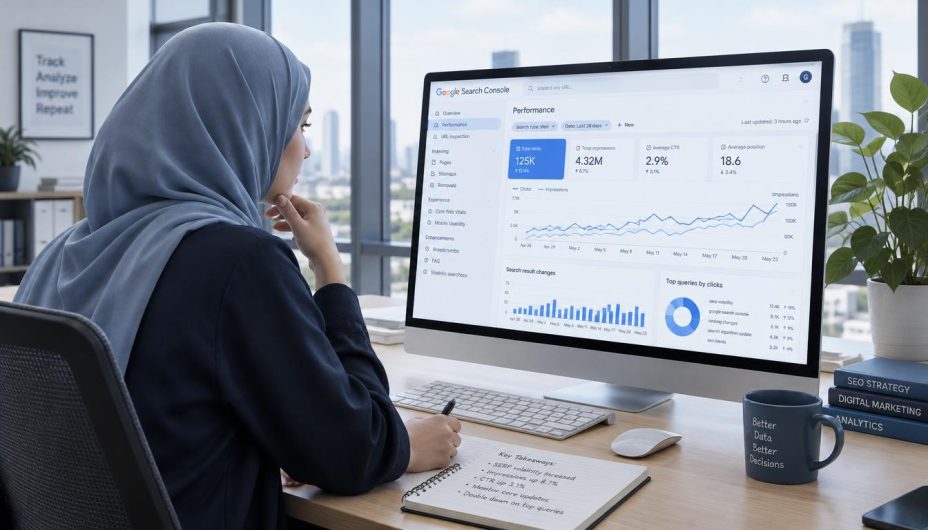
9 Essential Steps to Respond to SERP Volatility
1. Confirm whether the movement is broad or isolated
Start by checking whether SERP volatility affects one keyword, one page, one topic cluster, or much of the site. A single ranking move may be ordinary noise. A sustained decline across many related pages deserves deeper investigation.
Compare several queries that represent the same intent. Then compare the pages that receive impressions for those queries. This helps you avoid reacting to one anomalous ranking check.
2. Check whether Google confirmed an update
Do not label SERP volatility a Google update simply because rankings moved. Check the official Google Search Status Dashboard and compare it with our live Google update tracker.
If Google has not confirmed an update, describe the movement as volatility rather than presenting speculation as fact. That distinction is part of our editorial policy.
3. Compare the right date ranges
When a confirmed core update is involved, Google recommends waiting until the rollout is complete and then allowing at least a full week before doing a deeper comparison. Its core update guidance recommends comparing an appropriate post-update period with a similar period before the rollout.
This matters because daily SERP volatility during an active rollout can make early conclusions unreliable.
4. Segment Search Console data
Compare:
- Queries
- Landing pages
- Clicks
- Impressions
- Average position
- Countries
- Devices
- Search types
A site-wide decline suggests a different investigation from a drop affecting one content cluster. Search Console segmentation can also reveal cases where impressions remain stable but clicks fall because the result page itself changed.
For broader organic-growth decisions after the diagnosis, return to our 12 practical SEO strategies.
5. Rule out technical problems before rewriting content
Check indexing, canonical tags, robots directives, redirects, server responses, XML sitemaps, internal links, and recent migrations. Google’s traffic-drop debugging guide specifically lists technical issues, site moves, algorithmic updates, spam issues, seasonality, and changing interests among the causes worth investigating.
If technical causes are plausible, use our technical SEO audit guide instead of immediately rewriting the affected page.

6. Re-check search intent and the live results
Look at the pages and formats currently appearing for the affected queries. Has Google shifted toward fresher content, tools, ecommerce pages, local results, discussions, videos, or another format?
Content can lose visibility because the result set has become a better match for a different interpretation of the query. This type of SERP volatility is not solved by adding more words or repeating the target keyword.
If the result page is increasingly influenced by AI features, review our foundational SEO for AI guide and the AI Search & SEO hub. If multimedia formats are becoming more important, our guide on whether video podcasts can support SEO provides additional context.
7. Assess content quality without chasing a quick fix
Google’s people-first content guidance encourages publishers to evaluate whether content provides substantial, useful, reliable information.
When SERP volatility is sustained and competitors clearly provide a stronger result, evaluate:
- Does the page answer the main intent quickly?
- Is important information accurate and current?
- Are unsupported statistics or outdated claims present?
- Does the page add original analysis or useful examples?
- Is the structure easy to scan?
- Are related pages connected with useful internal links?
- Does the page make its sources and editorial responsibility clear?
For content-focused improvements, use the Content SEO & Marketing hub. For site-wide context on what we cover and how our resources connect, browse the Online SEO Blogs article library.
8. Review link and site changes without assuming causation
Lost internal links, major navigation changes, migrations, or poor backlink practices can coincide with ranking movement. But correlation is not proof that a particular link caused SERP volatility.
For external-link questions, see how Google treats nofollow links and the Off-Page SEO & Link Building hub. Link attributes and ranking volatility are separate topics, so avoid using nofollow changes as a generic recovery tactic.
9. Make measured improvements and monitor the result
Once you have identified a real weakness, fix that weakness. Do not redesign the entire site because of one volatile day.
Google’s core-update guidance recommends avoiding quick fixes and focusing on meaningful, sustainable improvements. After making changes, document what changed and when. Then monitor Search Console over an appropriate period.
SERP volatility often settles differently across pages and queries, so recovery should be evaluated with trends rather than one screenshot or one rank-tracker reading.

How to Interpret SERP Volatility Without Overreacting
The most important skill is separating a meaningful pattern from normal movement. SERP volatility can look dramatic when you watch rankings hour by hour, but business decisions should rely on broader evidence.
Small position changes
A move from position two to four is different from a page falling from the first page to position thirty. Google’s core-update guidance specifically distinguishes small drops from large sustained declines and advises against drastic action when content is already performing well.
Clicks can change without a large ranking move
AI Overviews, featured snippets, local packs, video results, shopping units, discussions, and other features can change click behavior. A page may keep a similar average position while receiving fewer clicks.
This is one reason the site’s analytics resources should be used alongside ranking checks.
Demand can change
Seasonality and changing interests can reduce impressions even when your rankings remain relatively stable. Google recommends using Google Trends when investigating traffic drops related to changing demand.
Different industries behave differently
A local service query, B2B query, regulated-industry query, and informational query may show very different result-page behavior. That is why vertical-specific resources such as our real estate local SEO guide, B2B SEO guide, and cannabis SEO guide can provide useful context when diagnosing SERP volatility in different markets.
SERP Volatility vs. a Confirmed Google Update
| Signal | SERP Volatility | Confirmed Google Update |
|---|---|---|
| Meaning | Observed movement in search results | An update officially acknowledged by Google |
| Possible causes | Updates, technical issues, competitors, intent, demand, SERP changes | A specific announced ranking, spam, Discover, or other qualifying rollout |
| Proof | Third-party trackers or your own ranking/search data | Official Google communication or Search Status Dashboard |
| Best response | Investigate before making changes | Confirm rollout status, analyze impact, then follow relevant guidance |
The distinction matters because SERP volatility is evidence of movement, not proof of cause. Our Google Algorithm Update Tracker is designed around this separation.

Common SERP Volatility Mistakes
Assuming every ranking drop is a penalty
A broad algorithmic reassessment is not the same as a manual action or penalty. A page can lose position because other results are now assessed as more useful for the query.
Rewriting content during the first day of movement
Early SERP volatility during a rollout can change again before the rollout finishes. Editing multiple pages immediately can make later analysis harder because you introduce your own variables at the same time.
Changing URLs without a migration reason
An established URL should generally be preserved during a content refresh. Changing a slug because rankings moved creates additional crawling, indexing, and redirect complexity.
Relying on one rank tracker
Third-party volatility tools are useful for observing industry-wide movement, but they are not official confirmation of a Google update. Combine them with Search Console and official Google information.
Ignoring internal context
Internal linking, site architecture, topic relationships, and crawl paths can affect how search engines understand your pages. Use our technical audit resource and SEO improvement guide when SERP volatility reveals broader site weaknesses.
Using keyword stuffing as a recovery tactic
Repeating a phrase excessively does not solve a relevance or quality problem. Use keywords to describe the topic clearly, but focus on intent, usefulness, and accurate information. Our keywords-versus-SEO guide explains the distinction.
Practical SERP Volatility Checklist
- Confirm that the ranking change is sustained rather than a single observation.
- Check the Google Search Status Dashboard for confirmed updates.
- Compare the same date ranges in Search Console.
- Segment pages, queries, devices, countries, and search types.
- Check whether clicks, impressions, or both changed.
- Rule out indexing, redirect, canonical, robots, server, and migration problems.
- Review whether search intent or result-page features changed.
- Compare affected pages with current competitors.
- Review content accuracy, usefulness, originality, and structure.
- Check internal linking and important navigation paths.
- Avoid changing URLs without a strong technical reason.
- Document every meaningful SEO change with a date.
- Monitor trends after improvements instead of expecting instant recovery.
Use this checklist whenever SERP volatility appears significant enough to investigate. It keeps the response evidence-led instead of reactive.
Frequently Asked Questions
What is SERP volatility?
SERP volatility is the degree of movement in search-result rankings over time. It can be caused by ranking-system updates, technical changes, competitors, changing intent, seasonality, or other changes in search results.
Does high SERP volatility mean Google launched an update?
No. High SERP volatility shows that rankings are moving, but it does not prove the cause. Check Google’s Search Status Dashboard before describing the movement as a confirmed update.
How should I respond to SERP volatility?
Confirm the pattern, check official update information, compare Search Console data, rule out technical issues, review intent and competitors, and make only evidence-based improvements.
Should I change content immediately when rankings drop?
Usually not. If a rollout is still active or the change is small, wait for more reliable data. Large sustained drops deserve deeper investigation, but changes should address a specific weakness rather than act as a generic quick fix.
Can technical SEO cause ranking volatility?
Yes. Indexing problems, redirects, migrations, canonical changes, robots directives, server issues, and broken internal links can all affect visibility and may be mistaken for algorithm-driven SERP volatility.
Which data should I check in Google Search Console?
Review clicks, impressions, queries, landing pages, average position, countries, devices, and search types. Compare consistent date ranges and identify whether the change is site-wide or limited to specific pages or queries.
How long should I wait after a Google core update?
Google recommends waiting until the rollout is complete and then allowing at least a full week before doing a deeper Search Console comparison. This helps reduce the risk of reacting to temporary movement during the rollout.
Conclusion
SERP volatility is useful when you treat it as a signal to investigate rather than proof that something is wrong with your site. Search results change because Google’s systems evolve, competitors improve, technical conditions change, user demand shifts, and the composition of result pages changes.
When SERP volatility becomes significant, start with evidence: verify whether an update is confirmed, compare Search Console data, rule out technical issues, review intent and competitors, and identify specific weaknesses before editing content.
The strongest response to SERP volatility is not panic. It is a repeatable process of measurement, diagnosis, meaningful improvement, and monitoring. That approach aligns with Google’s guidance and gives you a much clearer basis for deciding what should—and should not—change.
For continued monitoring, bookmark our Google Algorithm Update Tracker, explore the Google Search Updates archive, and use the full Online SEO Blogs library to connect ranking changes with technical, content, AI-search, local, and off-page SEO topics.